



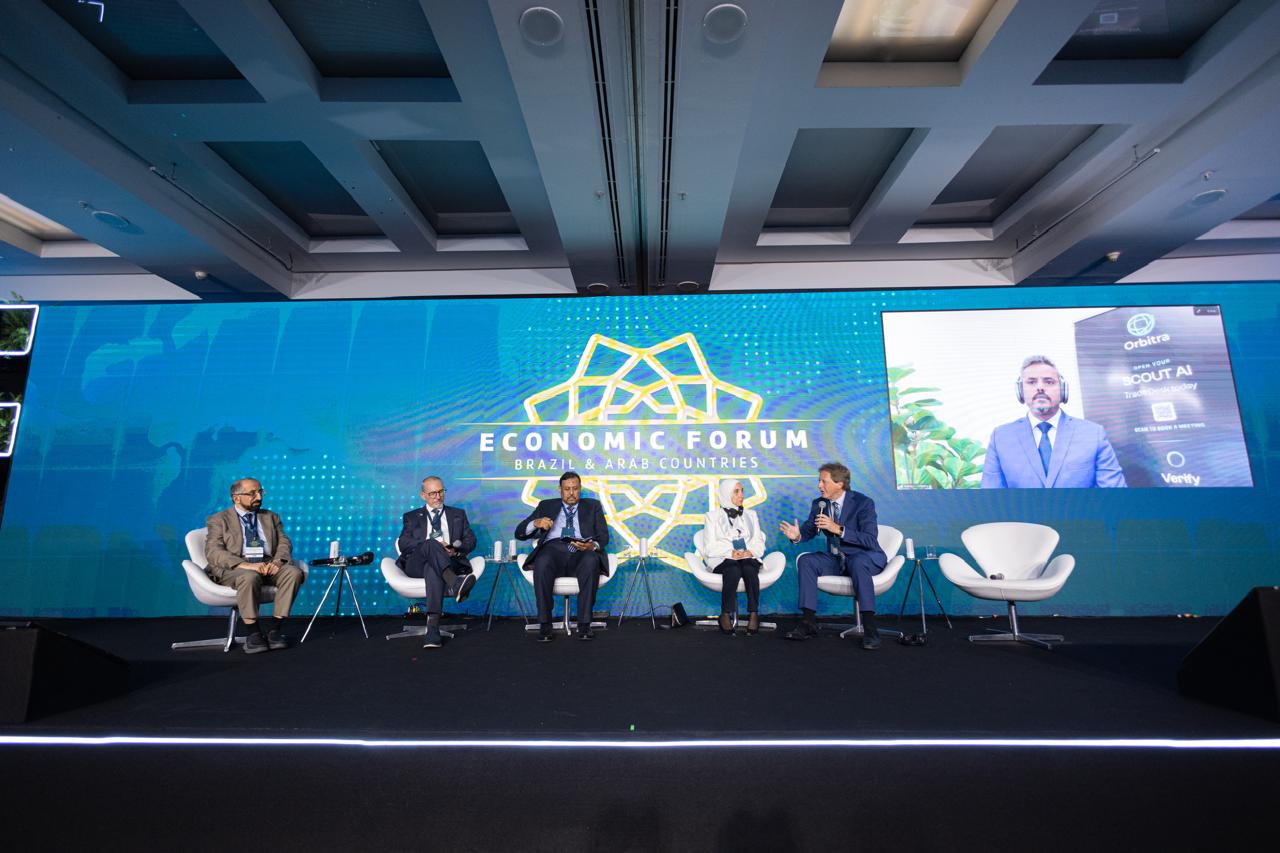
São Paulo – Things can no longer be done the same way—new paths must be found, especially in times of crisis. That was the central message of the third panel of the Brazil & Arab Countries Economic Forum, titled “Trade, Logistics, Corridors & Financial Resilience.” Khaled Hanafy, secretary-general of the Union of Arab Chambers, opened the panel by stressing the need for a new approach.
“Many exporters were forced to stop operating when the Strait of Hormuz was disrupted because they did not know how to adapt,” he said.
The event was held by the Arab-Brazilian Chamber of Commerce (ABCC) on Tuesday (25) in São Paulo.
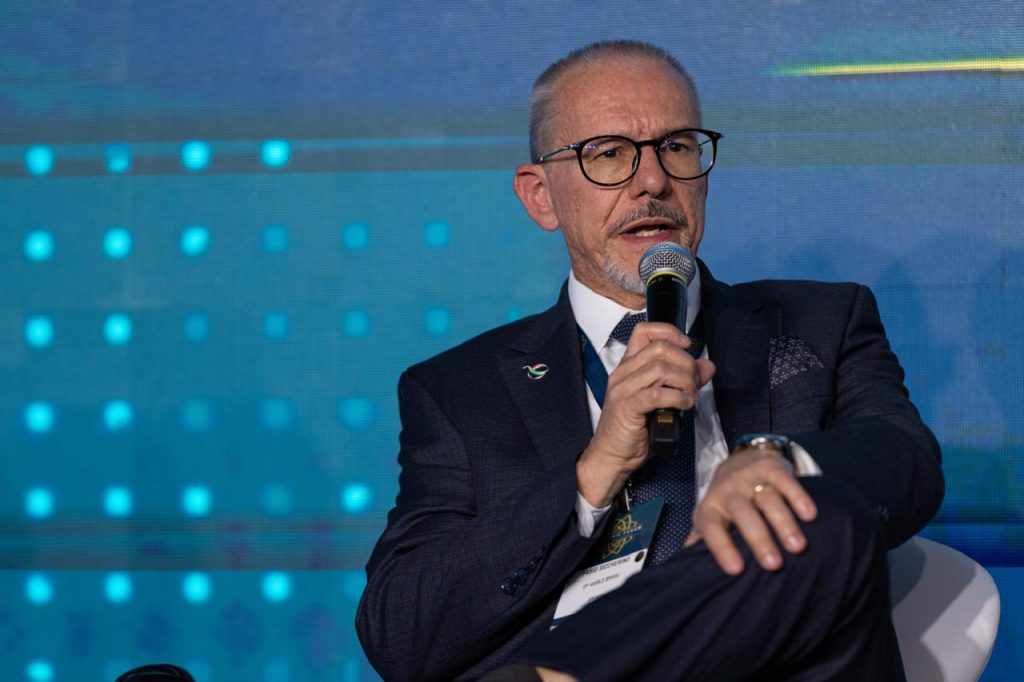
“There are four key words for the current moment: movement, storage, financing and knowledge. We can no longer move goods, store products or seek financing the way we used to. Knowledge is essential to stay alert to future crises,” Hanafy said. “I call on both sides, Brazilian and Arab, to think about these new paths.”
The discussion was again moderated by Justin Alexander, director of Khalij Economics. Fabio Siccherino, CEO of DP World Brazil, spoke about the company’s operations in 85 countries, with 82 port terminals, and its BRL 5 billion [USD 1 billion] expansion at the Port of Santos, which will increase container capacity and infrastructure for pulp, grains and fertilizers. He also pointed to logistical bottlenecks within Brazil.
“Getting a product to the port efficiently and competitively remains one of the country’s biggest challenges,” he said, citing low infrastructure investment. “Today, you need a Plan B and must keep an eye on international developments to know when to activate it.”
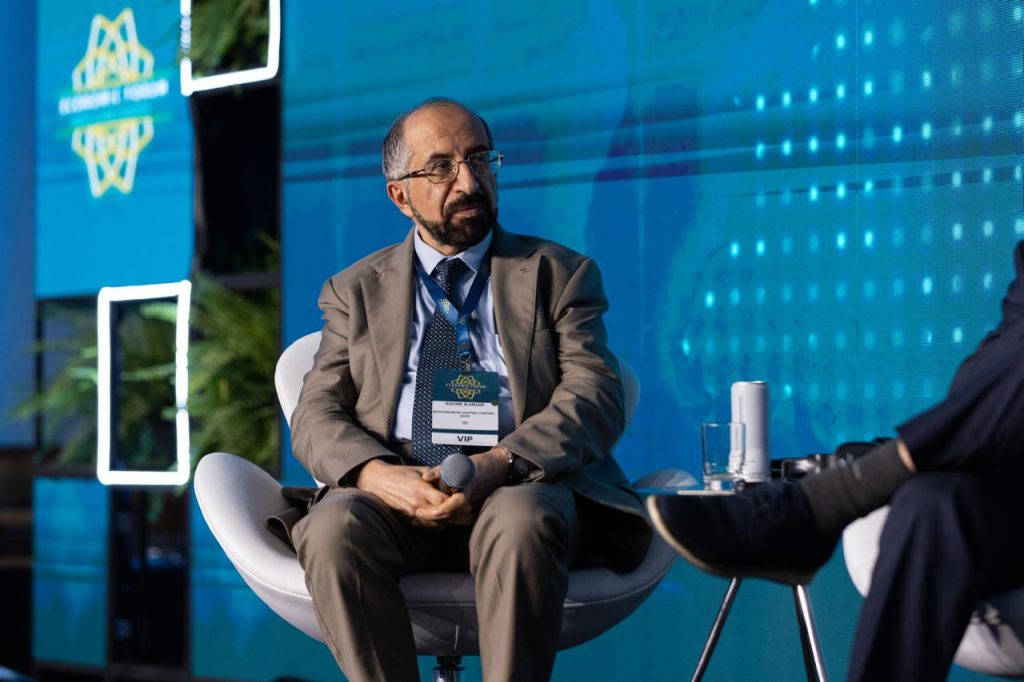
Hisham A. Al Ansari, executive director and executive partner of shipping giant MSC in Saudi Arabia, explained his company’s Plan B for dealing with disruptions to traditional trade corridors.
“At first, we used to track everything and used trucks to move the cargo. That’s how we created a sea-land-sea model. In Riyadh, which has a rail system, we added that mode as well. The intermodal system worked well, but it is still not as efficient as it should be.”
The experience showed him that even when the Strait of Hormuz is operating normally, other options exist, and that MSC can offer a more efficient and faster ecosystem.
Ali Mohammed Tabouk, CEO of the Salalah Free Zone in Oman, agreed that the world is undergoing a revolution and that countries need to share their experiences in search of solutions.
“I traveled 16 hours from Oman to come here and share the potential we have to build new opportunities,” he said.
He then made his best pitch for the country in in the current context: Oman’s diplomacy.
“Oman is friends with everyone! We have no enemies. And it is an art to be friends with everyone. We are only 5 million people, but we are the perfect hub for Brazil’s private sector—we can be the gateway for Brazilian products,” he said.
Sara El Gazzar, dean of the Faculty of International Transport and Logistics at the Arab Academy for Science, Technology and Maritime Transport in Egypt, noted that there is a direct link between politics, logistics and trade. Routes once considered normal and lasting are now being disrupted.
“Resilience is needed to find new routes,” she said.
In this regard, she argued that relations between Brazil and the Arab world should be less linear and more strategic, which would also help in the search for new trade routes.
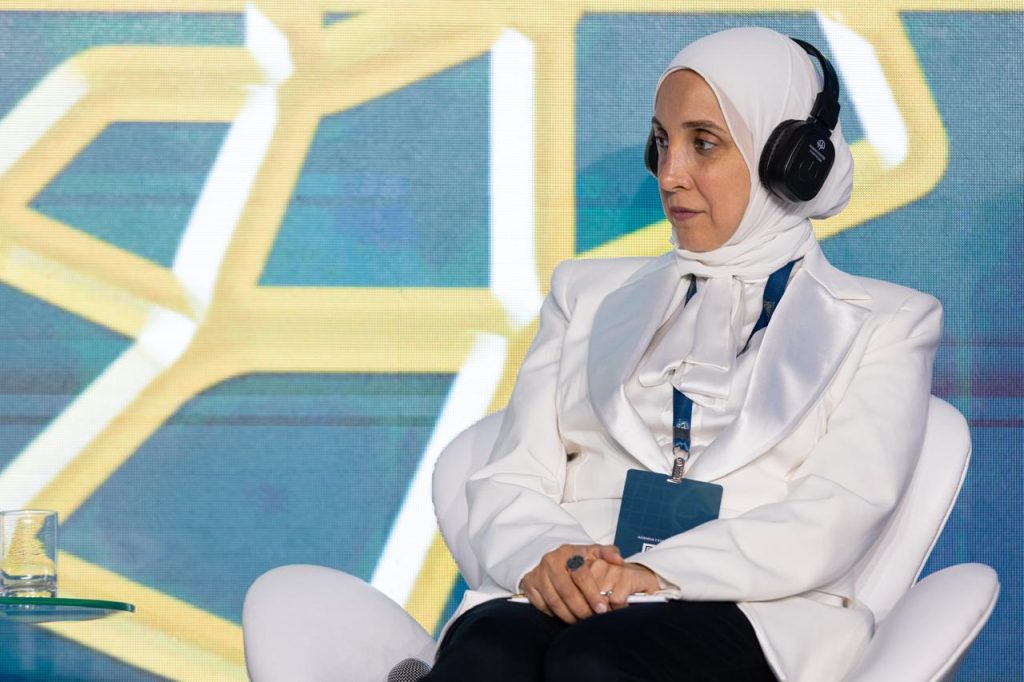
“Brazil needs to better understand the complexity of the Arab world, which encompasses many different cultures, from Morocco and Egypt to the Gulf countries. In bilateral trade, both sides need to better understand each other’s culture.”
El Gazzar also highlighted the potential of Arab countries as hubs for halal products destined for other non-Arab Muslim countries.
Finally, Maher Nour, founder and CEO of trading company Orbitra, spoke about the importance of having teams that can collaborate and stay alert to geopolitical developments.
“Each problem will be different, so you need real-time data, real-time collaboration and real-time solutions. And, of course, a lot of adaptability.”
The forum, organized by the ABCC, is sponsored by Fambras Halal, International Halal Academy, Vale, DP World, Cdial Halal, First Abu Dhabi Bank, MBRF Global Foods Company, Qatar Airways and MZAH Group Investment. Institutional supporters include the Arab League, the Union of Arab Chambers and the Federation of Industries of the State of Bahia. Cacilda Aragão Tours is a partner.
Read also:
Brazil, Arab nations face geopolitical challenges
Uncertain landscape calls for Brazil-Arab ties
Trust keeps Brazil-Arab food corridor open
Translated by Guilherme Miranda
