



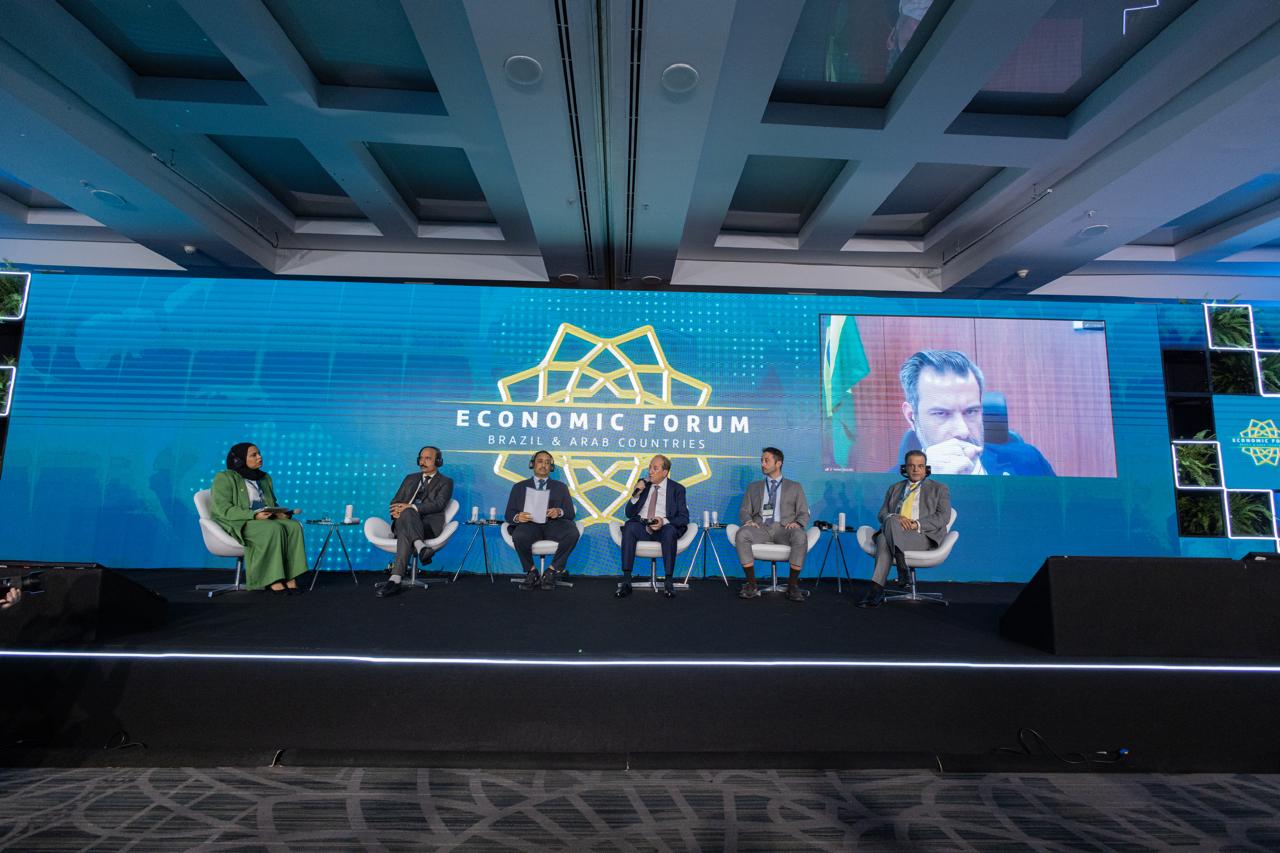
São Paulo – During the second panel of the Brazil & Arab Countries Economic Forum, held by the Arab-Brazilian Chamber of Commerce (ABCC) on Tuesday (25) in São Paulo, Brazilian and Arab business leaders, experts and officials discussed maintaining trade despite volatile fertilizer prices and other challenges.
Investment security in Brazil was one of the key topics. “Resilience” and “confidence” were among the terms most frequently mentioned by panelists. Frank Nadimi, director of agribusiness and biofuels for Latin America at S&P Global Energy Consulting, opened the session and said maritime blockades in the Black Sea and surrounding region, as well as other conflicts around the world, pose major challenges.
According to him, oil is currently selling for around USD 90 a barrel, while diesel can fetch more than USD 100 a barrel — far above the usual price of approximately USD 15.
Due to climate-related effects, the Panama Canal has lost capacity, while rivers are drying up in Europe. In addition, the United States has been boosting its gross domestic product through the AI investment bubble.
“The market is still absorbing these impacts, and we will start to see the results in 2027,” Nadimi said.
Nadimi highlighted the expansion of ethanol production in Brazil and the growing number of ports.
“We used to have the largest exporter here in São Paulo [the Port of Santos], but now we have several ports in the Northeast [region].” Nadimi praised Brazil’s ability to keep its economy stable despite changing political scenarios.
Resilience in the face of crises
Rumaitha Al Busaidi, Head of Business Development and Local Value Addition at Oman’s Hydrom, moderated the panel. She said there is resilience among players involved in Brazil-Arab trade.
Mohamed Bin Ahmed Al Obaidly, chairman of the Technology and Innovation and Food Security and Environment committees at Qatar Chamber, said Qataris have developed a food security policy based on three pillars: supply-chain networking, local production and strategic stockpiling.
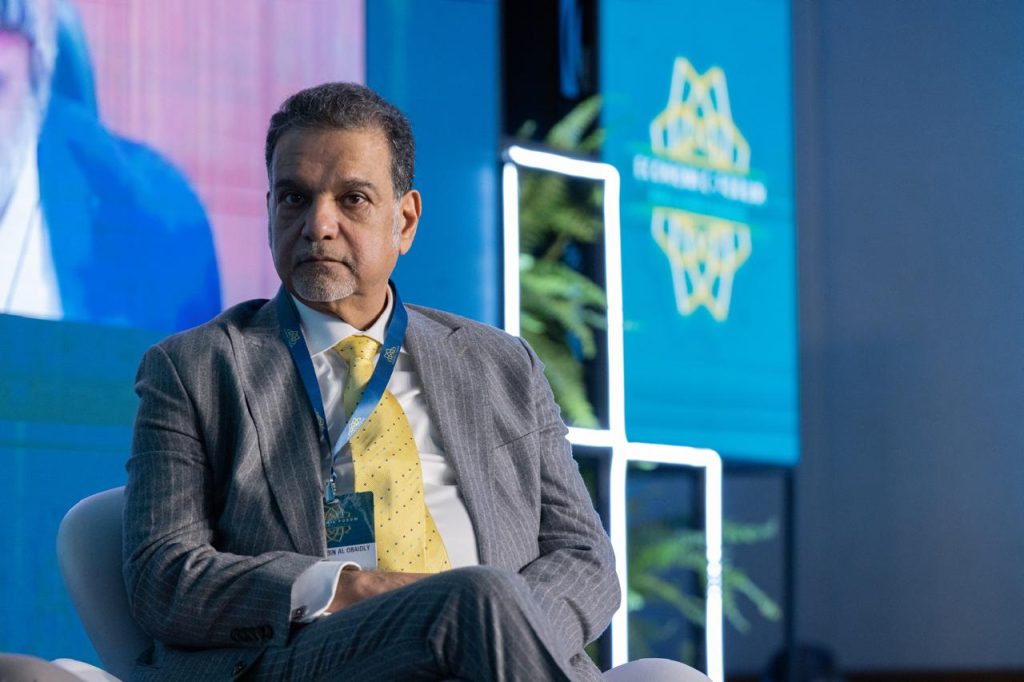
“There is no food security without partnerships,” he said, explaining that Qatar has diversified its food supply base to anticipate potential crises. “We do not depend on a single supplier. At most, 30% comes from each one,” he said.
According to him, it is necessary to build a resilient and sustainable ecosystem capable of withstanding even taxes and tariffs imposed by other countries. “Brazil has already realized what is happening. There is an economic war underway,” he said.
Obaidly also suggested that ships carrying food from Brazil to Arab countries could return with fertilizers imported by Brazil, thus reducing costs.
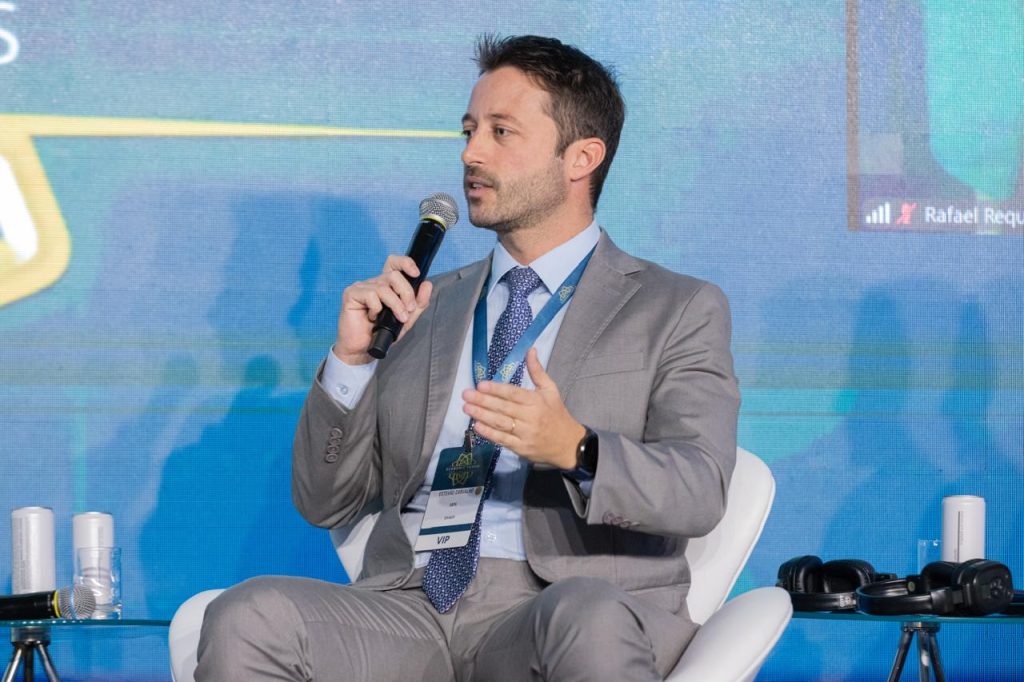
Estevão Carvalho, executive manager at the Brazilian Animal Protein Association (ABPA), highlighted that Brazil exports chicken to more than 150 countries, with 25% going to the Middle East. Even with the Strait of Hormuz closed, ports elsewhere absorbed the shipments.
From January to July this year, exports fell by just 5% compared with the same period last year, he said.
“Brazilian chicken is still flowing to the region, and we are confident that our partners have adequate supplies,” Carvalho said.
M.J. Khan, executive director of the Netherlands-based World Agriculture Forum (WAF), highlighted the strong complementarity between Brazil and Arab countries, which has allowed “food corridors” to remain uninterrupted.
“No one is self-sufficient, either in food production or exports,” he said.
Halal certification as a bridge of trust
Ali Zoghbi, vice president of FAMBRAS Halal Certifier and president of the International Halal Academy, said that despite each country having specific requirements, Brazil has “built trust,” referring to the etymology of the Arabic word for trust, which is linked to the sacred.
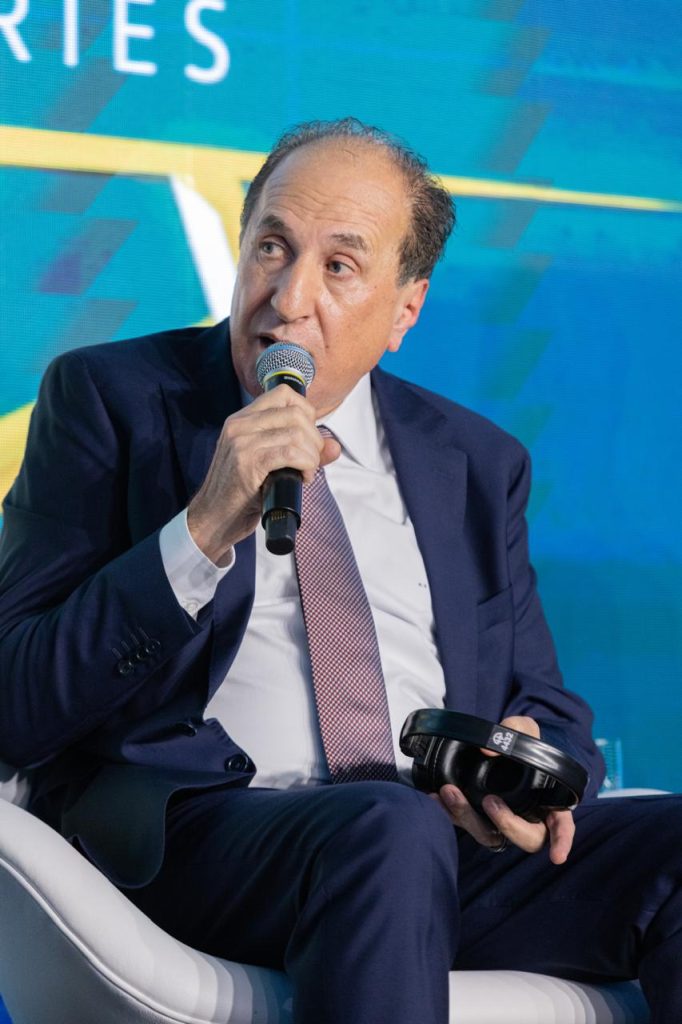
According to Zoghbi, a range of stakeholders help maintain Brazil’s position as the leading halal exporter. He also stressed the importance of empathy in relations between Brazil and Arab countries.
“Getting to know one another is still a long journey. We are a minority in Brazil, but we are part of Brazilian society,” he said.
Rafael Requião, Deputy Secretary of the Brazilian Ministry of Agriculture and Livestock’s Secretariat for Trade and International Relations, said Brazil sees its relationship with Arab countries as a two-way street. Despite a decline in fertilizer imports, he said there is still significant potential for trade in these inputs.
Hashim S. Hussein, Head of UNIDO-ITPO’s Investment and Technology Promotion Office in Bahrain, stressed that Brazil needs to add value to its raw materials.
“Brazil has the potential for technology, smart farming, and drones. In the Arab world, we have the capital and highly dynamic entrepreneurs,” he said.
He noted that 65% of the population in Arab countries is under 30, similar to Brazil’s demographic profile, and that creating more jobs is a challenge.
“There needs to be peace and security among countries. Business leaders will play a very important role. We will have sustainable programs involving Brazil and Arab and Islamic countries,” Hussein said.
The forum, organized by the ABCC, is sponsored by Fambras Halal, International Halal Academy, Vale, DP World, Cdial Halal, First Abu Dhabi Bank, MBRF Global Foods Company, Qatar Airways and MZAH Group Investment. Institutional supporters include the Arab League, the Union of Arab Chambers and the Federation of Industries of the State of Bahia. Cacilda Aragão Tours is a partner.
Read also:
Brazil, Arab nations face geopolitical challenges
Uncertain landscape calls for Brazil-Arab ties
Translated by Guilherme Miranda

