



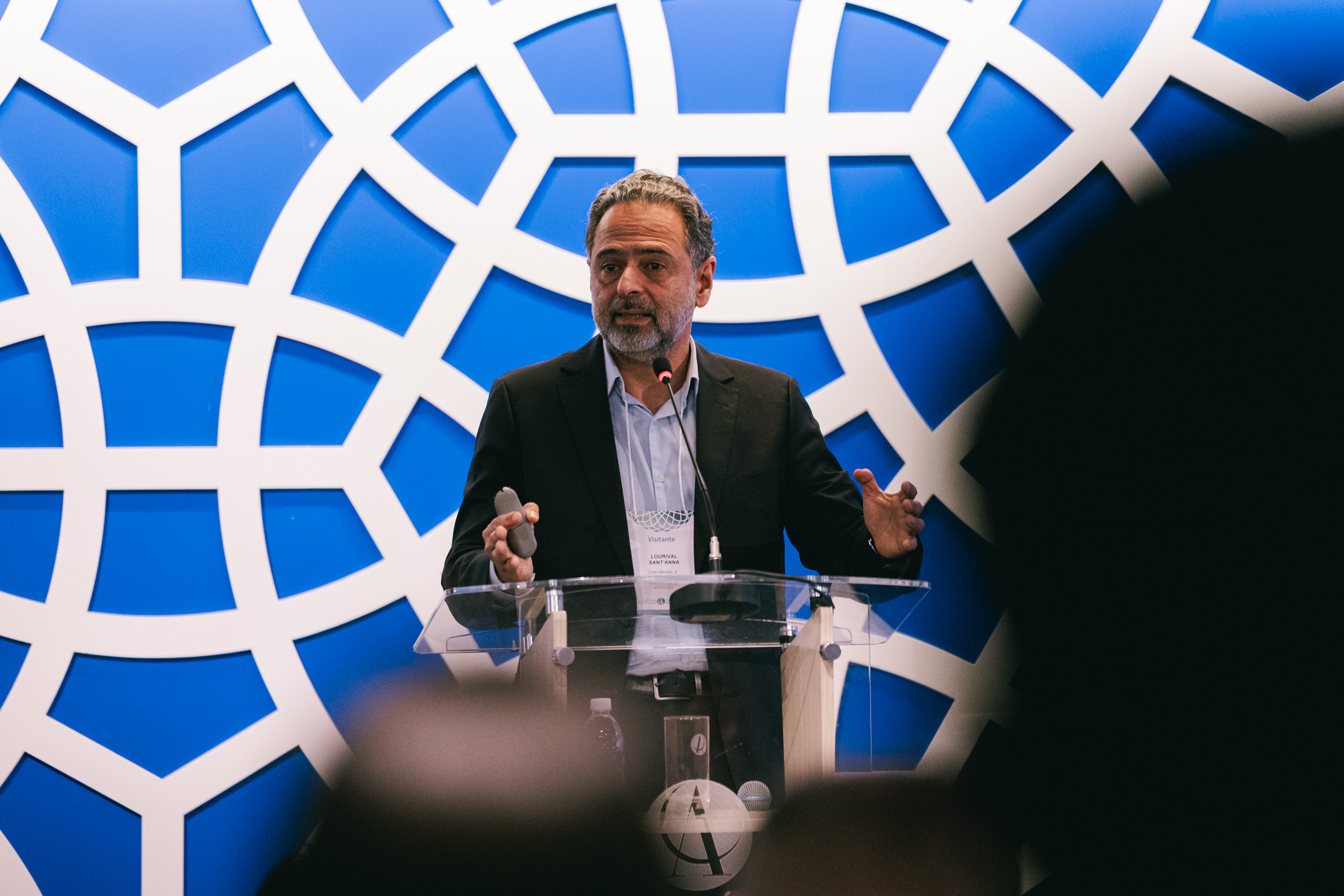
São Paulo – Tariff hikes, geopolitical tension, and domestic uncertainty are some of the challenges awaiting Brazil’s next president. This Thursday (17) morning, journalist Lourival Sant’anna delivered the lecture “Between geopolitics and the economy: the challenges in post-election Brazil” at the Arab-Brazilian Chamber of Commerce, in São Paulo, covering local and global politics and economy.
Sant’anna looked to pre-World War I (1914-1918) theories and events to analyze current geopolitical tensions and how they manifest themselves in Brazil. He also went over the tariff hikes on different Brazilian-made goods put in place by United States president Donald Trump since July 2025.
Despite the onus of tariffs on Brazilian goods, he said, the United States are being judicious in their assessment of what they must do to protect their industry. “Brazil is highly protectionist,” he said. Even though the Brazil-US trade balance tilts toward North America, on average, Brazil levies an 11% tariff on imported goods, whereas the United States enforces an average tariff of 2.5%, and the average charge in Europe is 4%. What Trump aims to address through his measures is the imbalance in these tariffs, Sant’anna argued.
Another global geopolitical challenge, he said, is ongoing conflicts, especially the closure of the Strait of Hormuz. Alongside the straits of Dardanelles, Malaca, Bab al-Mandab, and Taiwan, Hormuz could “stop the world,” the lecturer said, due to the number of vessels and goods that depend on these passageways to reach their destinations.
Aside from challenges, Sant’anna, who’s an analyst with CNN Brazil and a columnist for the O Estado de S. Paulo daily, discussed opportunities, including rare earths. Brazil currently holds the second biggest critical mineral deposits; the biggest ones are in China. However, Brazil’s reserves are yet to be fully mapped out, which means Brazil could be sitting on the world’s largest expanses of land containing chemicals used in the manufacturing of car batteries, for instance.
“Minerals are critical from the perspective of those who need then, and they are strategic from the perspective of those who have them. From our perspective, they are strategic,” he said. Sant’anna said the challenge for Brazil is to find trading partners for these goods outside the 56-country alliance led by the United States and away from China’s influence. The bulk of financial gain from these minerals resides in their processing, and Brazil needs partners in order to process its reserves.
Domestic challenges
On the domestic front, Brazilians must choose their next president amid a Supreme Court crisis and a race marked by deep political polarization. “Winning elections these days is not about politics. It’s an existential issue, as the loser might even be looking at jailtime. This makes it harder to implement much needed reforms, which are unpopular. And we do need reforms,” he said regarding the heated presidential race, a common occurrence around the world these days.
For Sant’anna, Brazilians struggle with embracing dissent. “Dissent in itself is not the problem so much as the desire to exclude the other.”
He said that no matter who should win the election in Brazil, the incumbent administration or the opposition, economic challenges will be similar, with mounting gross debt and the need to achieve a primary surplus.
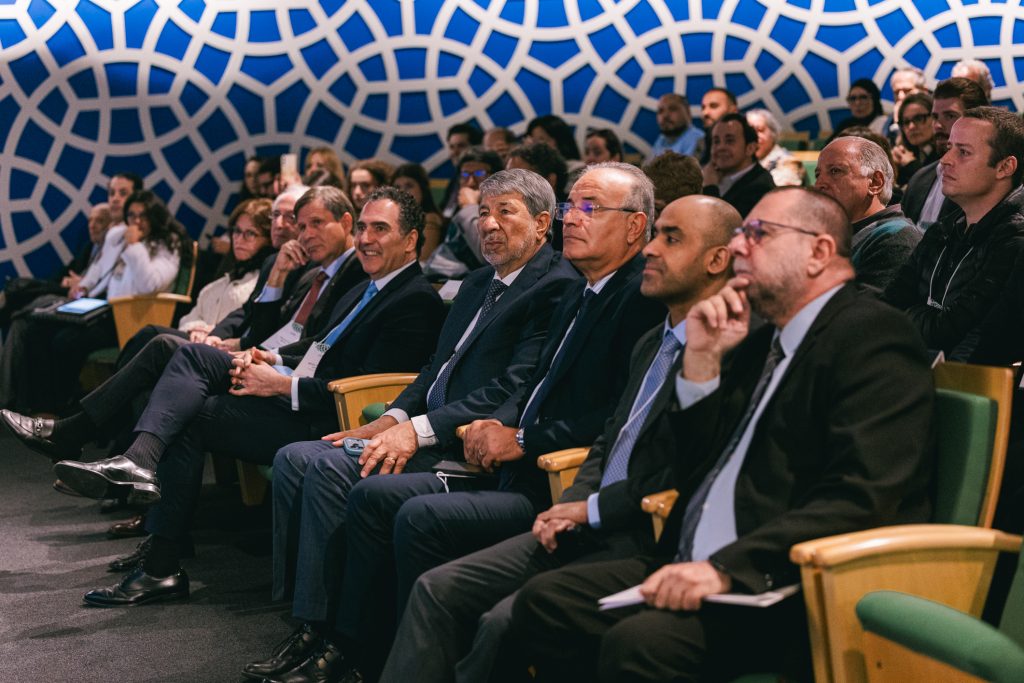
Arab Chamber executives attending the lecture included president William Adib Dib Junior, International Relations vice president and secretary general Mohamad Orra Mourad, Marketing vice president Silvia Antibas, former president and Advisory Board member Rubens Hannun, and director William Atui. The event was also attended by the head of the Arab League’s delegation in Brazil, Ibrahim Alzeben, the dean of the Council of Arab Ambassadors in Brasília and ambassador of Morocco, Nabil Adghoghi, and the ambassador of the Kingdom of Bahrain, Bader Abbas Alhelaibi, as well as politicians and businesspeople.
Translated by Gabriel Pomerancblum
