




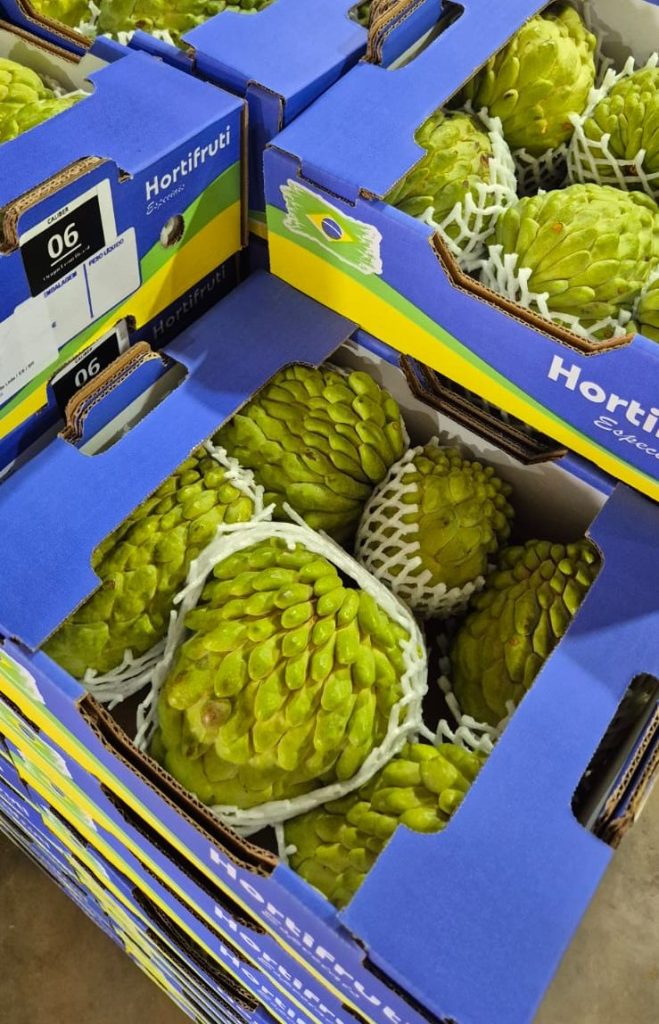
São Paulo – Atemoyas grown by Japanese descendants in the countryside of Brazil’s São Paulo state are now reaching the Saudi market through a company based in Brusque, Santa Catarina state. This operation—bringing together different origins, languages, and an exotic fruit—is coordinated by Adilson Neves, owner of Multipla Comex. Founded in August 2020, the company began by exporting more traditional fruits, such as mangoes and papayas, to established Brazilian trade partners including Spain and the United Kingdom.
With expertise in business management and a course in International Negotiation from the University of Michigan in the United States, he had just returned to Brazil when he decided to take on the challenge of exporting.
“I chose to establish an export trading company to focus on small Brazilian producers who have no experience with export procedures,” says Neves, who began his professional career as a journalist.
Today, his company exports to Canada, the UK, the Netherlands, and Germany, as well as to Qatar, Lebanon, and Saudi Arabia in the Middle East.
“I started by exporting mangoes and Formosa papayas. At that time, we shipped by sea to Qatar and Kuwait, as I met Lebanese businessman Mohammed Amiri and we began handling mango exports through the ports and airports of Jeddah, Dubai, Qatar, and Kuwait,” Neves says.
Over time, he realized there was strong competition in more traditional fruit categories and shifted his focus to exotic fruits.
“I started doing research and was invited to join a program run by Brazil’s National Confederation of Agriculture and Livestock (CNA) in partnership with ApexBrasil. We were the only export trading company participating because of our commitment to supporting small producers.”
ApexBrasil is Brazil’s trade and investment promotion agency.
In 2022, he began studying exotic fruits and exporting persimmons to Canada. “I enjoyed the experience, but I was still missing the Middle Eastern market, which I had always dreamed of serving,” he says.
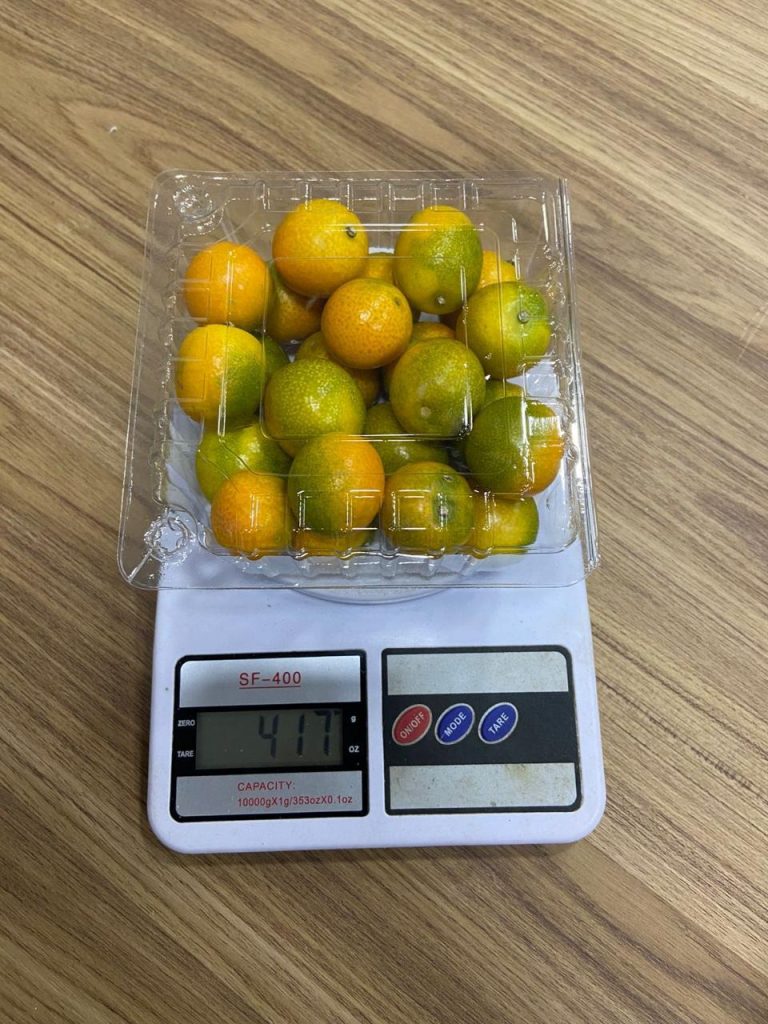
During his research, he met a Syrian Arab who introduced him to his current client, Mandouh Baziad, based in Jeddah. That marked the beginning of a partnership that has now lasted three years and involves shipments of red guava, loquat, plum, kumquat, and atemoya.
The latter was introduced after he learned that Spanish cherimoya was already popular in the Saudi market. He then encouraged his client to introduce Brazilian atemoya to Arab consumers, as atemoya is a hybrid of sugar apple and cherimoya.
“The result was immediate: the Arab market loved the exotic appeal of the Brazilian fruit,” he says.
The beginning was not easy. Arab customers are known for being demanding, which required him to learn more about proper ripening, fruit sizing, certifications, packaging methods, and protective handling.
“But we overcame those challenges, and everything became easier because I chose Japanese Brazilian growers in São Paulo, due to their proximity to Guarulhos Airport, which is our hub in Brazil for commercial flights. Most importantly, Arab buyers place a high value on quality and are very honest, while also constantly seeking new varieties of exotic fruits,” he says.
Three years after beginning regular exports to Saudi Arabia, Neves says he has built an excellent relationship with his clients. He quickly learned the Arab way of negotiating and building relationships, including respect for the Muslim faith and the importance of personalized service.
Because of the conflict in the region, Neves also had to remain flexible and adapt to challenges ranging from changes in shipping dates to developing new packaging solutions. As several airlines suspended operations in the region, leaving only two carriers with the highest freight rates, competitiveness declined. The solution was to reduce the cost per kilogram by switching to lighter packaging.
“Arab buyers like everything to be clearly explained. They value honesty, good service, and being treated as a priority. My relationship with them is of the highest level: I send technical data sheets in Arabic and make an effort to find the right words and expressions to use. The result is that they appreciate my approach, praise me all the time, and are always grateful for the partnership,” says the exporter, who will be in Campinas in July to welcome an Arab delegation attending an event in the city.
Read also:
Arab exporters bring fruit to São Paulo
Report by Débora Rubin, in collaboration with ANBA
Translated by Guilherme Miranda
