


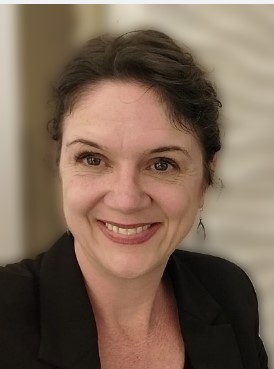
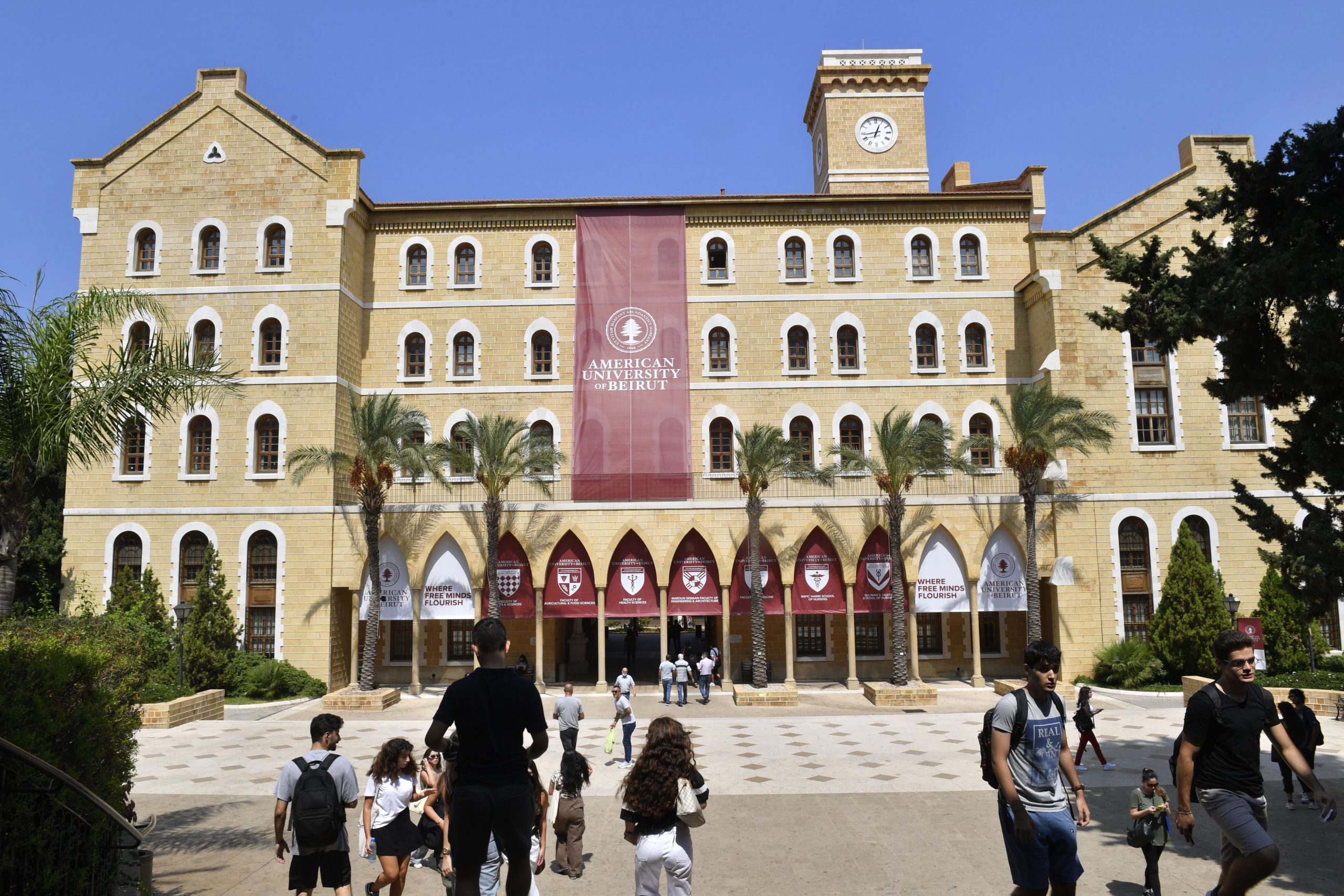
São Paulo – The American University of Beirut (AUB) is working to strengthen its connections in Latin America, with a particular emphasis on Brazil. Across the region, the institution is looking to reconnect with alumni and to build rapport with the Lebanese diaspora, as well as its donors, said AUB Advancement director for Latin America, Caroline Chalouhi Brennan, whose role is to fulfill this mission.
“We have many alumni throughout Latin America. In Brazil, we have many doctors and many politicians,” said Carolina regarding former AUB students. She says Brazilian physicians of Lebanese descent have returned to Lebanon to learn about their roots and attended AUB, a famous, prestigious university across the Middle East. “We have many leaders all over society, in every country, who are AUB graduates,” says Caroline.

Alumni are referred to as AUB ambassadors. “We want to create and cultivate this relationship, to keep them abreast of AUB’s news because they can discuss the AUB with friends, colleagues, and contacts,” she says. “They are our ambassadors, and we intend to strengthen this relationship. We can’t forget them because they’re doing their work, and the AUB is where they got their start,” says Caroline.
The university is also looking to build connections with the Lebanese diaspora in general. “We have plenty of Lebanese people in Brazil, more so than in Lebanon. We want to introduce the AUB to them should they wish to come and reconnect with their roots in Lebanon,” she says, adding that, for example, diaspora members can attend Arabic lessons during the summer.
The AUB’s Latin America rapport-building front also includes connecting with donors who provide financial support to students or projects at the university, such as patients at the AUB’s hospital. There are donors in Latin America and elsewhere, many of whom are successful Lebanese business owners. “We have donors all over the world,” says Caroline.
Allocation of donated resources is usually dictated by the donating person or entity, in a fully transparent process, according to Caroline. For example, people can create study grants named after their families to offer students, or they can fund a given class. Donors can also choose whether they wish to help a specific demographic, such as Brazilian, Lebanese, history, arts, or medical students. Caroline says a USD 10 million has been made recently, but donations can be much more modest. “If someone sends a thousand dollars, the student gets those thousand dollars,” she says.
When it comes to the work in Latin America, Peru has been visited recently, and further appointments are scheduled in other countries, Colombia included. Brazil is also in the plans, on a date to be determined. Caroline says a visit to the country is still in the planning stage because many Brazilian cities are home to Lebanese communities. The AUB’s senior vice president for Advancement and Business Development, Imad Baalbaki, who oversees all of the institution’s development initiatives, including América Latina, is expected to join the trip to Brazil.
From Medicine to the Arts
Created during a visit by United States missionaries in 1866, the AUB offers graduate, master’s, and doctorate courses in different fields. Faculties include Agricultural and Food Sciences; Arts and Sciences: Health Sciences; Medicine; Engineering and Architecture, a school of Nursing, and a school of Business; and a newly founded School of Computing and Data Sciences. The American University of Beirut currently has ten Brazilian students.
The university has a large campus in Beirut, a hospital and medical center, and a farm for agricultural engineering studies in the Bekaa Valley. The institution’s AUB Mediterranean campus in Pafos, Cyprus opened in 2023. Mexico is the base of the university’s Latin American initiative. The AUB also has an administrative office in the United States, and its educational approach, standards, and practices are based on the American liberal arts model of higher education, according to its website.
Contact details:
American University of Beirut – AUB
AUB website
Instagram for Latin America
Facebook for Latin America
To receive the quarterly newsletter in Portuguese: [email protected]
Read also:
Book explores Lebanon’s history and diaspora
Translated by Gabriel Pomerancblum
