


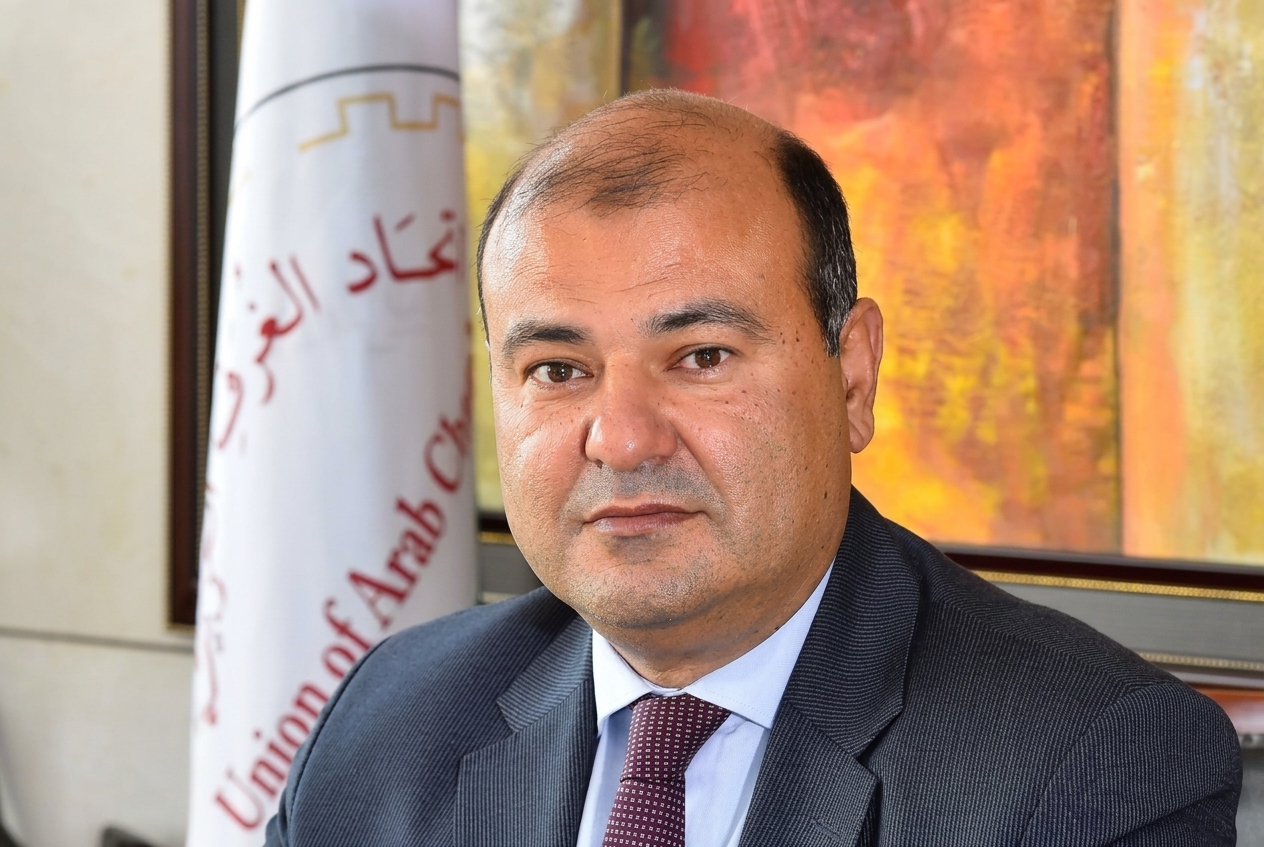
São Paulo – During his recent visit to Brazil, Khaled Hanafy, secretary-general of the Union of Arab Chambers, proposed taking Brazil-Arab ties beyond trade volumes through the Brazil-Arab Value Alliance (BRAVA), an initiative focused, among other areas, on logistics and technological alignment.
“What is needed is to switch from just trade to strategic alliances. From just targeting each other’s markets to building value together. That’s what we propose here because this will make a like a shift in the relation from just a track of trade volume to something different”, Hanafy told ANBA last week.
Citing the roughly USD 33 billion in trade between Brazil and Arab countries last year, Hanafy said trade is clearly growing, Brazil is seen as a friendly country in the Arab world, and large volumes of Arab products also reach Brazil.
Going forward, we need to focus on more than trade flows or trade volumes
Khaled Hanafy
“But a relationship is not defined by trade volume. We have started discussing logistics links and cultural initiatives that deepen and strengthen ties between the Arab countries and Brazil,” he said, describing the new momentum he sees and envisions. “Going forward, we need to focus on more than trade flows or trade volumes.”
According to Hanafy, BRAVA goes beyond partnerships between companies.
“We are going to join forces to create value together. And creating value does not just mean having two companies working together. Strategically, we need to talk about projects and investments. We need to talk about logistics corridors and networks, not just two interconnected ports. We need to discuss technological alignment.”
Hanafy wants Arabs and Brazilians to focus on value-adding activities.
“I propose something called collaborative advantage over comparative advantage,” he said. “We need to focus more on digitalization, artificial intelligence, logistics and services in general, and even in industry, have companies that incorporate services, digital solutions and artificial intelligence. We need to move away from the traditional way of doing business and toward something different.”
Ongoing conflicts are also prompting changes in trade, according to the secretary-general.
“Now, we’re witnessing geopolitical problems everywhere. Therefore, there is a need for different locations and alternative routes,” he said. Highlighting the impact of war on international trade, Hanafy said businesses need to be protected, resilient and able to seize opportunities. “When war breaks out, trade routes change, logistics corridors change, different ports are chosen, and products have different origin and destination options,” he said.
Artificial intelligence
Asked how advanced Arab countries are in artificial intelligence and new technologies and about opportunities for cooperation with Brazil in these areas, Hanafy stressed the region’s diversity.
“Arab countries are changing significantly. We cannot treat them as a single bloc. There are 22 Arab countries, and they are not homogeneous. They can be segmented into three or four groups. Some are highly advanced in AI and technology, and all 22 have young populations. About 65% of the population is under 30,” he said.
Khaled Hanafy said some Arab countries are highly equipped with expertise in artificial intelligence and digitalization.
“By promoting interaction between people in the Arab region and their counterparts in Brazil, we can foster entrepreneurship to develop platforms and products, not just traditional tangible goods. There are many other areas where we can work together to enter markets,” he said.
The secretary-general was in Brazil to attend the Brazil & Arab Countries Economic Forum, organized by the Arab-Brazilian Chamber of Commerce (ABCC) on August 25 in São Paulo, with the Union of Arab Chambers as an institutional supporter. Hanafy spoke at the opening and joined a panel. He also held meetings in Brazil alongside the Union’s senior consultant Sara El-Gazzar and director of Joint Arab Chambers Affairs Hoda Katchan.
Read more:
Uncertain landscape calls for Brazil-Arab ties
Translated by Guilherme Miranda
