



Marrakech – The world’s greatest fashion designers are remembered for their creativity and innovation. That was true of Coco Chanel, Karl Lagerfeld, and of course, Yves Saint Laurent. Born in Oran, Algeria, in 1936, Saint Laurent created his iconic trapeze dresses while serving as Dior’s artistic director, introduced the women’s tuxedo, and designed the Mondrian Collection, inspired by the geometric forms of the Dutch painter (1872–1944). On many occasions, he found inspiration in Marrakech, one of Morocco’s four imperial cities, alongside Meknes, Fez, and Rabat.
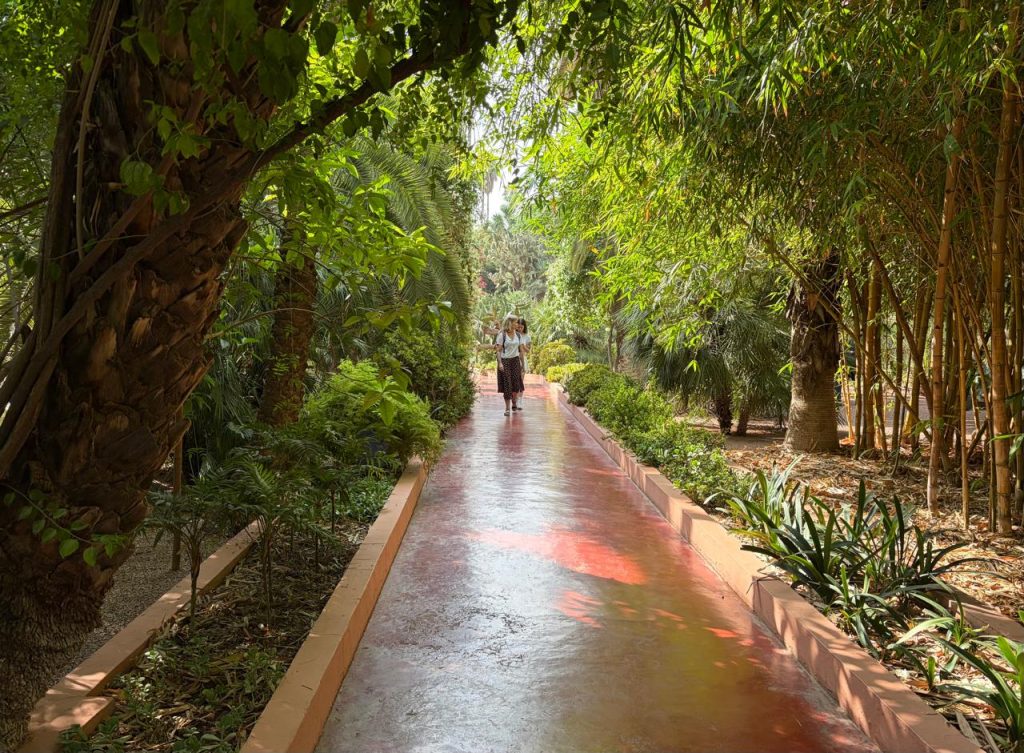
At his home there, Saint Laurent spent months with business partner and significant other Pierre Bergé. His maison is nestled among the seemingly endless trees and plants of the Jardin Majorelle, itself an open-air work of art created by French painter Jacques Majorelle (1886–1962).
The stories of Saint Laurent, Marrakech, Bergé, and the Jardin Majorelle are intertwined and begin to unfold even before the visit starts. The museum and the garden stand virtually side by side in the Gueliz district, a French-planned neighborhood lined with broad, tree-filled streets and avenues.
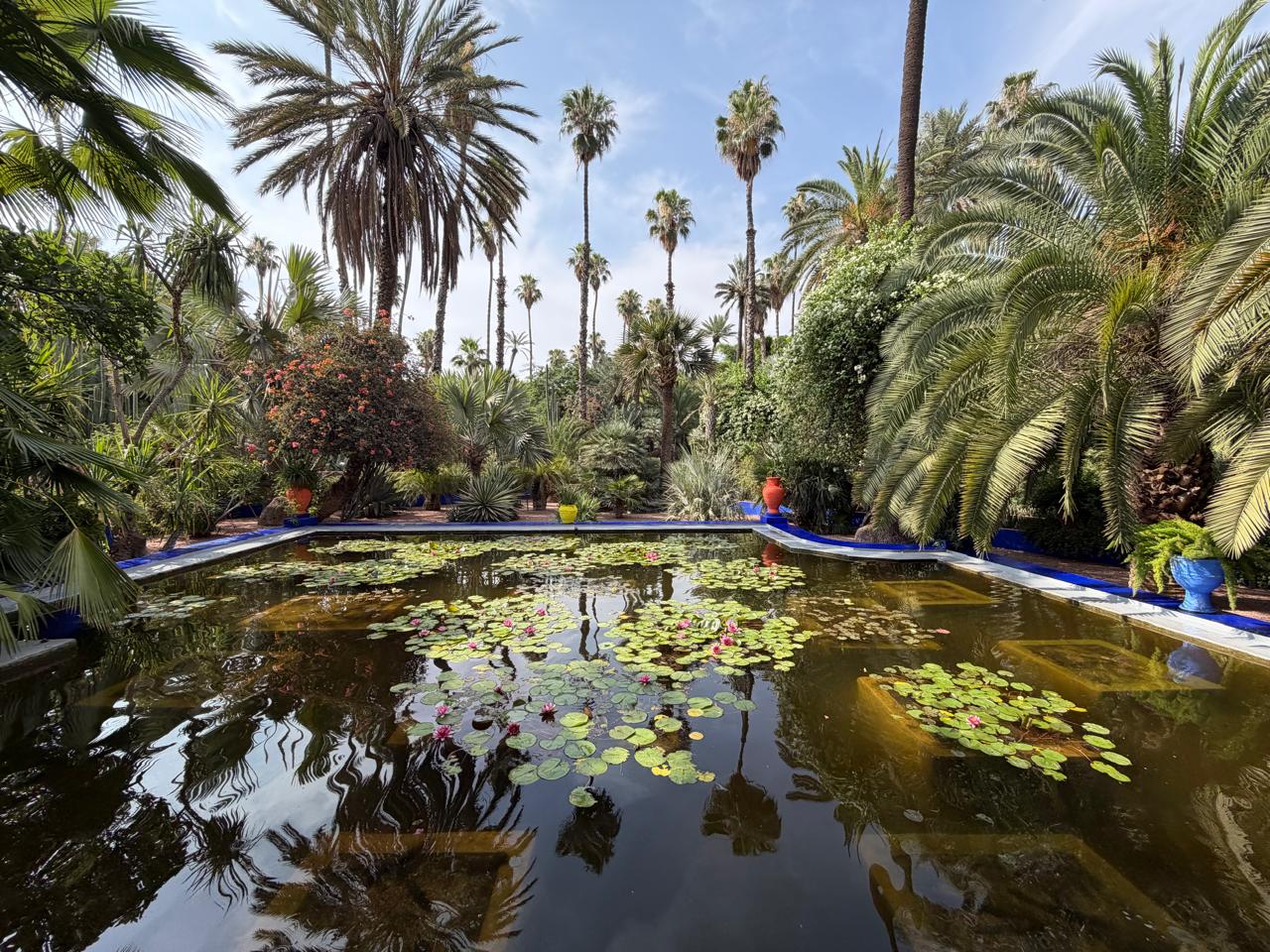
From the entrance, the garden welcomes visitors with its remarkable botanical diversity, made possible by plant species imported from around the world. It is both a journey through time—the garden took more than 40 years to reach its present form—and a celebration of nature. Among its highlights are aquatic plants such as water lilies, as well as cacti, succulents, bamboo, and agaves.
It was not always this way. After Majorelle’s death, the garden that had inspired him so deeply was threatened with disappearance. In 1966, Saint Laurent—who often drew inspiration for his haute couture from the spirit of the cities he visited—fell in love with Marrakech, always accompanied by Bergé. They returned time and again, made friends, became part of the local community, and, in 1980, purchased the garden and its adjacent studio. They restored the property and created Villa Oasis, which became their home for several months each year.
Majorelle, Bergé, and Saint Laurent are present throughout the visit. The buildings are painted in the distinctive Majorelle Blue. Yet this shade is not native to Marrakech. Blue is the signature color of Chefchaouen, the city in northern Morocco. Marrakech is defined by red, a reflection of the hue of its earth. The only license to spread blue across the city came through the brushstrokes of an artist—as it did with Majorelle.
Many other colors are celebrated throughout the visit: the green of the plants, along with the reds, yellows, and countless other hues that define the culture of the Berbers, or Amazighs, the people who inhabited Morocco long before the arrival of the Arabs.
Within the Jardin Majorelle is the Pierre Bergé Museum of Berber Arts. Housed in what was once Majorelle’s studio, it displays a collection of Berber artifacts and traditional garments.
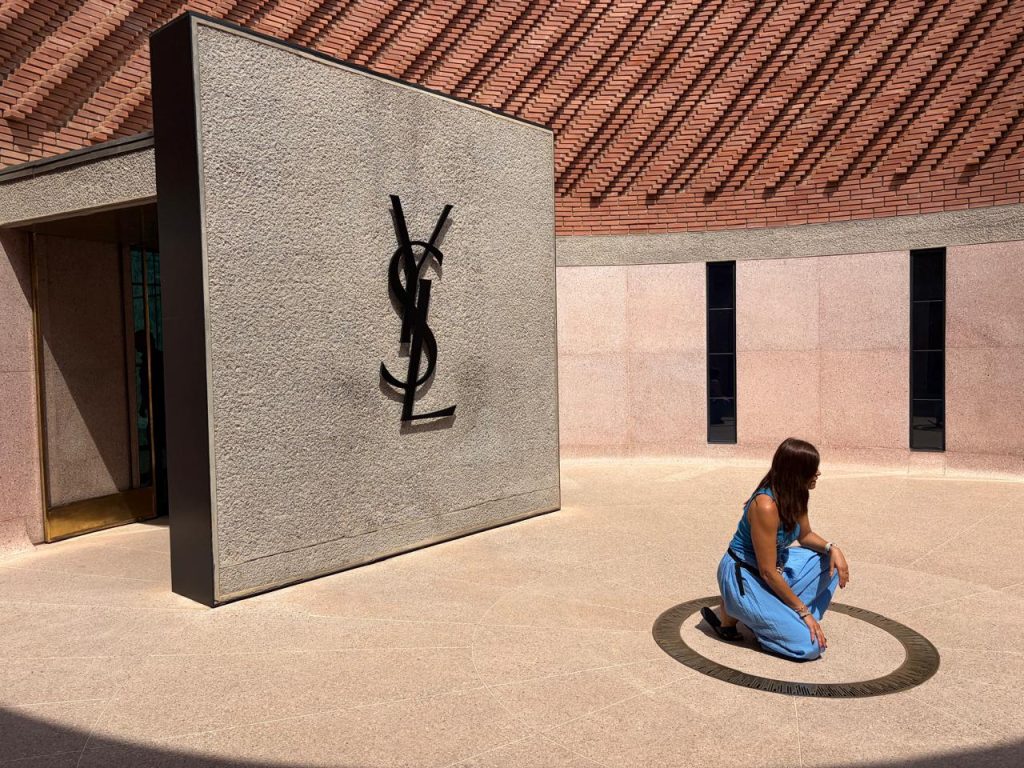
Leaving the Jardin Majorelle and returning to the red hues that define Marrakech’s architecture, a short walk brings visitors to the Yves Saint Laurent Museum. Paris has a museum dedicated to the designer, and so does Marrakech. At the entrance, few visitors can resist posing for a photo beside the iconic YSL initials that became synonymous with the fashion house.
Inside the museum, inaugurated in 2017, visitors are taken through a tribute to Saint Laurent’s life and a retrospective of his career.
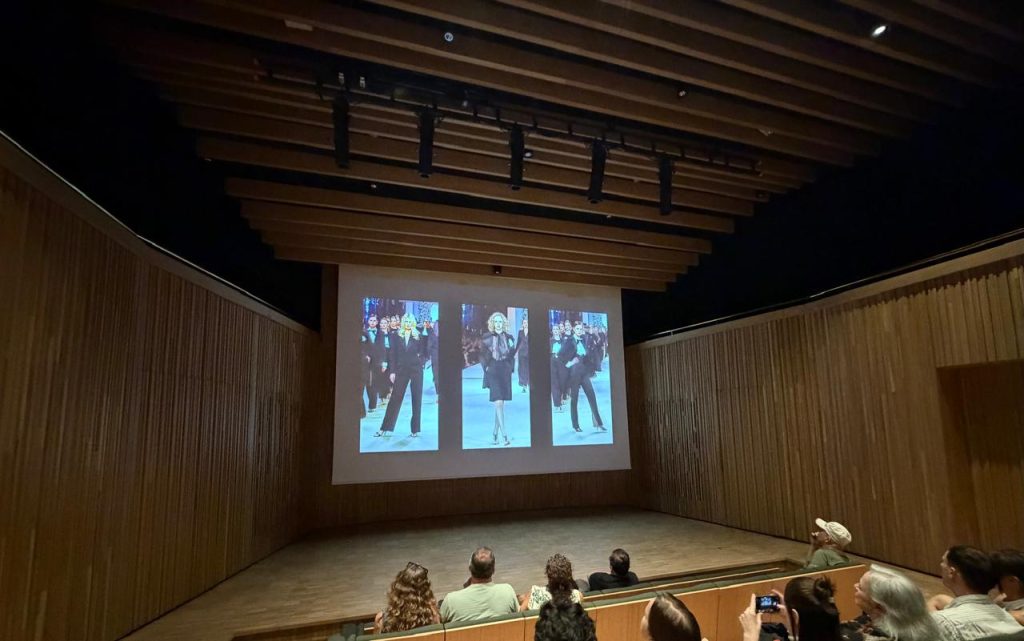
In the museum’s auditorium, a series of documentaries explores Saint Laurent’s creative process and shows how he both influenced and was influenced by the arts around him. His designs are displayed on mannequins, while collections are contextualized through sketches and explanatory panels.
Reflecting on the city that came to preserve part of his legacy and profoundly shaped his creative vision, Saint Laurent once said, “Before Marrakech, everything was black. This city taught me color.”
Read the other stories in the series:
Trip made at the invitation of Braztoa and ONMT
Translated by Guilherme Miranda
