


São Paulo – The city of Marrakech, in south-central Morocco, bakes under the blazing sun and intense heat. Even so, the Atlas Mountains ensure that waterways continue to irrigate the city. Still, temperatures can easily reach 37°C (99°F) on an spring day. For centuries, these harsh conditions led the peoples of Morocco—including the Berbers and the Arabs—to develop solutions to cope with the heat and water scarcity.
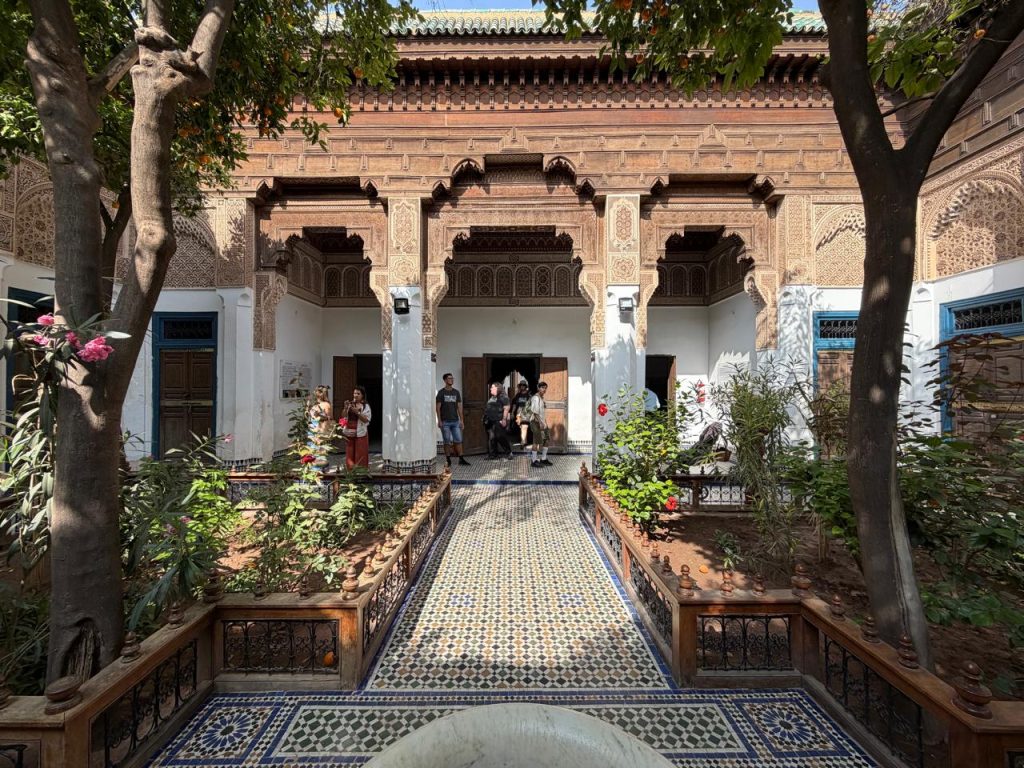
One such example is the Bahia Palace (al-Bahia meaning “the Brilliant” in Arabic). Although the exact date of its construction is unknown, the Arab-Andalusian-style palace began taking shape around 1870 and continued to be expanded in the years that followed. It is currently undergoing restoration work, which does not prevent visitors from exploring its courtyards planted with tangerine trees or its halls and wings, designed to promote natural air circulation.
The building’s ceiling is made of cedar, a type of wood found in the country’s mountains. Inside, it is painted with colorful floral motifs inspired by the Amazigh, or Berbers, the region’s original inhabitants. For the Berbers, who make up nearly half of Morocco’s population of 38 million, colors carry symbolic meanings and are an integral part of the country’s cultural identity.
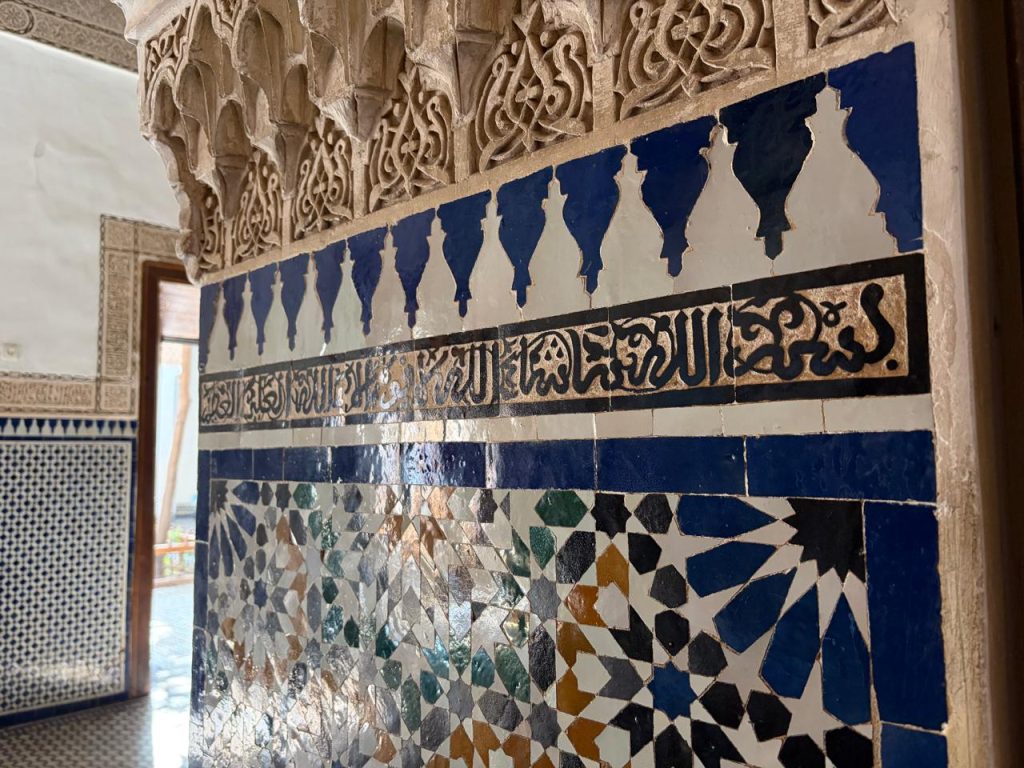
From the 8th century onward, Arabs and Islam took root in the country. Alongside Berber culture, Islamic tradition is carved into the walls of the Bahia Palace. Verses from the Quran, Islam’s holy book, adorn the palace’s plaster-finished walls. The palace floors also feature another hallmark of Arab craftsmanship: geometric patterns created using the Moroccan technique known as zellige, in which ceramic tiles are carved or glazed to form intricate designs.
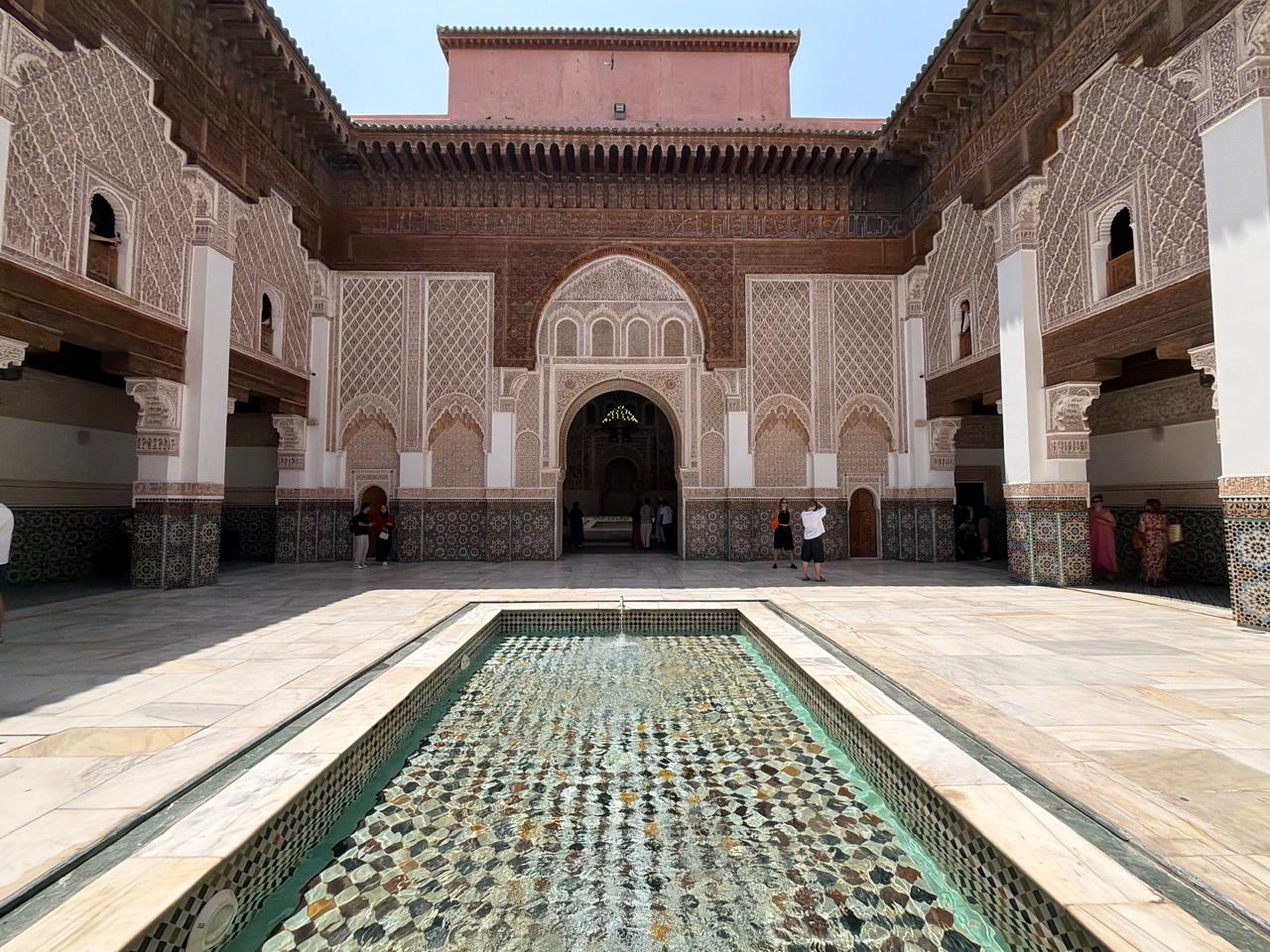
Bahia Palace is located in Marrakech’s historic Jewish Quarter within the medina. About a 20-minute walk away is another major landmark: the Ben Youssef Medersa. Also known as a madrasa (“school” in Arabic), the building was commissioned by Sultan Abdullah Al-Ghaleb Assaadi and completed in 1565. It served as an Islamic school for centuries. The complex features 136 rooms spread across two floors, as well as a central courtyard, a prayer room, and an ablution room, where Muslims wash their hands and feet before praying.
A basin used for ablution was brought from Andalusia, the region of present-day Spain ruled by the Arabs between 711 and 1492. It is considered an Islamic treasure, with geometric, floral, bird, and fish motifs carved into its surfaces. The basin was commissioned by Youssef Ben Tachfine, founder of the Almoravid dynasty, one of the empires that ruled Morocco between 1009 and 1106.
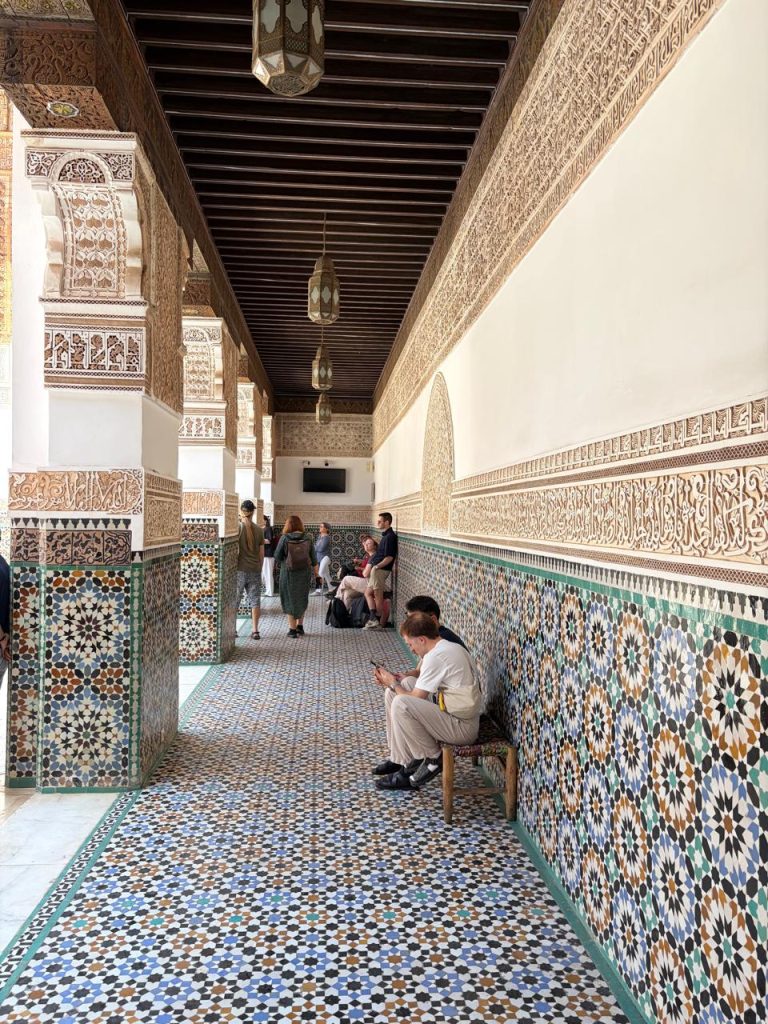
The zellige found at Bahia Palace is also featured here, decorating parts of the floors and walls. The walls are adorned with verses from the Quran and arabesque motifs carved in plaster, along with one of Islam’s most prominent forms of artistic expression: calligraphy.
The classrooms are arranged along the corridors of the rectangular building. At its center lies a courtyard that captivates visitors by bringing together all these architectural elements around a central reflecting pool.
Rich in architectural solutions, the school is also a remarkable example of engineering. The central reflecting pool served a purpose beyond decoration. It stored rainwater collected from the roofs and channeled through a network of pipes. Once in the central courtyard, the water was used for personal hygiene, cooling the building, and general maintenance.
ANBA visited Marrakech and Casablanca during a press trip organized by the Moroccan National Tourist Office (ONMT) and Braztoa, the Brazilian tour operators association, with support from GTA Seguros. This is the second article in a series on the tourist destinations of Marrakech and Casablanca, two cities that reflect the multicultural character of Morocco while preserving the heritage of its Arab and Berber peoples, the “free men of the desert.”
Read the other articles in the series:
Trip organized by Braztoa and ONMT
Translated by Guilherme Miranda
