



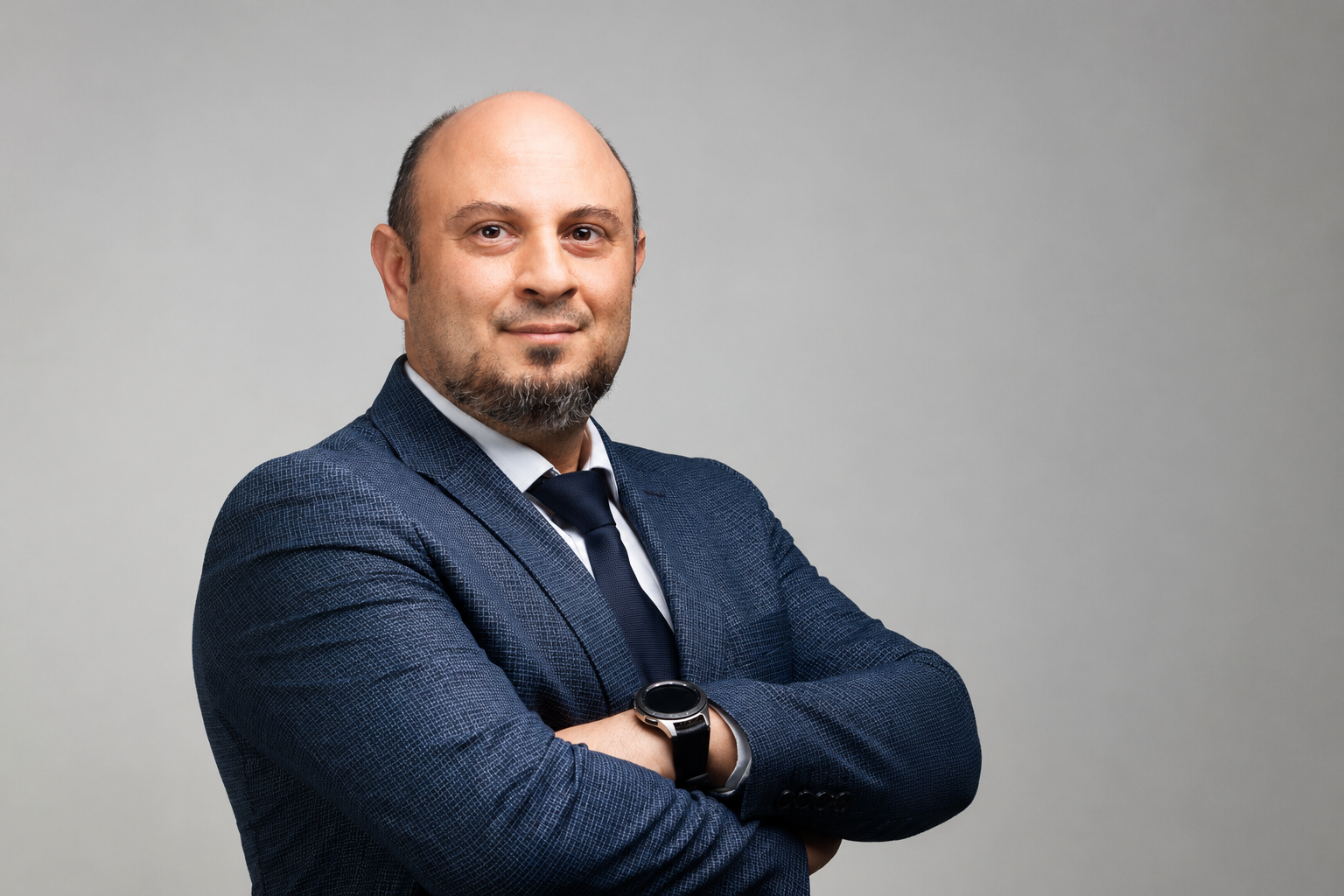
By Walid Youssef El Orra*
In an increasingly connected and demanding global trade environment, competing globally no longer depends solely on production capacity, quality and price. Access to new markets also requires understanding different consumers, meeting specific requirements and, above all, building trust among companies, countries and cultures.
It is in this environment that halal certification is taking on an increasingly strategic role for Brazil.
Historically associated with meat, halal compliance now spans a much broader economy. Processed foods, ingredients, sugar, grains, cosmetics, pharmaceuticals, chemicals and other supply chains are part of an ecosystem connecting industries with consumers in different parts of the world.
More than a religious or documentary requirement, halal is becoming an international language of trust and compliance, capable of bringing together markets with different cultural, regulatory and commercial characteristics.
From requirement to internationalization strategy
Over the decades, Brazil has built a strong position as a supplier of products to Arab countries and Muslim-majority markets. This trajectory stems not only from Brazil’s production capacity, but also from the industry’s adaptation to the requirements and expectations of destination markets.
Now, a new stage is emerging.
For companies seeking to expand their international presence, the question should not simply be, “Do I need halal certification?” but also, “Which markets do I want to grow in, and how should I prepare my company to access them?”
When incorporated into internationalization planning, halal compliance allows companies to anticipate requirements and assess raw materials, suppliers, processes, storage, logistics and internal controls.
Certification thus ceases to be merely a response to a specific buyer’s demand and becomes part of a strategy for competitiveness, market diversification and international expansion.
A bridge of trust
There is also a dimension that goes beyond industrial processes.
On the other side of a commercial transaction is a consumer who needs to trust not only the product, but also the supply chain that brought it to market.
For Muslim consumers, this trust has a fundamental religious and cultural dimension. At the same time, attributes such as traceability, transparency, integrity and process controls align with expectations that are increasingly important to non-Muslim consumers as well.
Operating in this environment therefore requires more than issuing certificates. It requires technical expertise, cultural understanding, institutional relationships and the ability to navigate different regulatory environments.
It is at this intersection that halal certification plays an important role: serving as a bridge between Brazil’s production capacity, the Arab world and other consumer markets for Halal products.
And this bridge must be built on credibility.
A certification in transformation
The halal sector itself is undergoing profound transformation.
The economy has become more international, professionalized and technically demanding. Importing countries are strengthening their recognition, accreditation and oversight systems, while new industries and product categories are beginning to see opportunities in these markets.
This evolution also requires a new generation of certification bodies.
At CDIAL Halal, we have followed this movement through a corporate transformation based on governance, professionalization, technology, quality, international recognition and the development of new capabilities.
It is not just about keeping pace with market growth but preparing the organization for the demands that will shape the halal economy in the years ahead.
This means strengthening relationships with international organizations and markets, continuously monitoring the evolution of standards and accreditation systems, expanding capabilities across different supply chains and offering Brazilian companies a structure suited to an increasingly sophisticated global environment.
Our view is that a modern certification body should not represent merely the final stage of an export operation. It should understand companies’ international journey and help ensure they are prepared to access markets with security, predictability and credibility.
The next chapter for Brazil’s halal industry
In international trade, trust has economic value.
Brazil already has production scale, industrial diversity and a long-standing trade relationship with the Arab world. The next step is to turn these strengths into an even more diversified presence in the global halal economy, preparing new companies, products and sectors to compete globally.
The future of Brazil’s halal industry, therefore, will not be built solely on higher export volumes. It will also be built on the ability to bring trust, knowledge and intelligence to commercial relations.
In this context, certification plays a role that goes beyond the product: it brings cultures closer, translates requirements, reduces distances and connects companies with new markets.
For CDIAL Halal, evolving alongside this market means taking responsibility for helping Brazil’s production capacity find, in the Arab world and other halal markets, not only buyers but also partners who recognize Brazil as a reliable, prepared supplier connected to the new demands of the global economy.
This is the bridge we want to keep building.
* Walid Youssef El Orra is Executive Director of CDIAL Halal
The opinions expressed in the articles are the authors’ responsibility
Translated by Guilherme Miranda

