



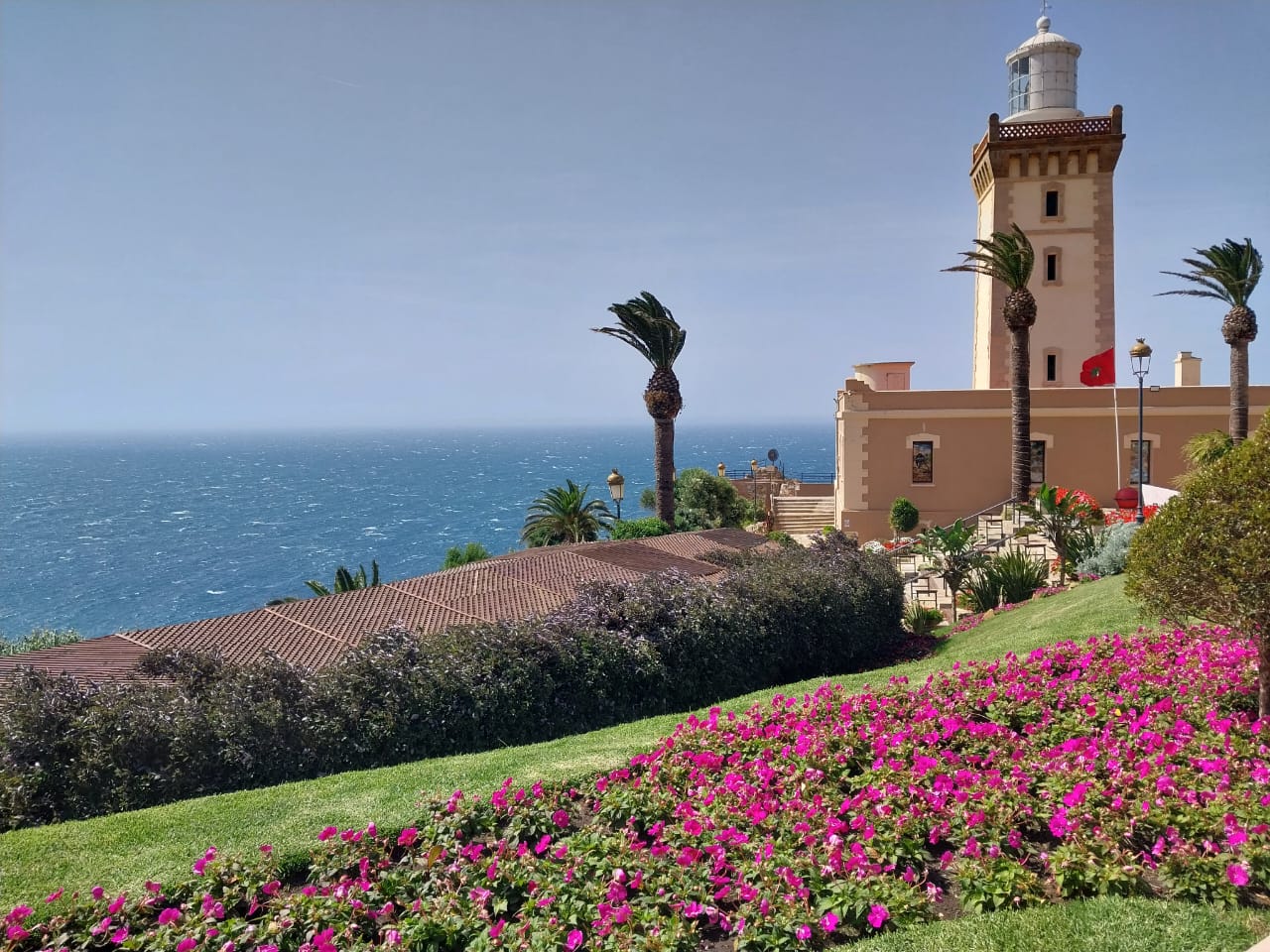
Tangier – Few places in the world offer the chance to witness the meeting of a sea and an ocean. One of them is Morocco, the Arab country in North Africa. Along the coast of Tangier, one of Morocco’s most beautiful cities, stands Cape Spartel, a high rocky promontory from which visitors can see where the Mediterranean Sea meets the Atlantic Ocean. The two bodies of saltwater merge into a vast expanse of blue, making it impossible to tell exactly where one ends and the other begins.
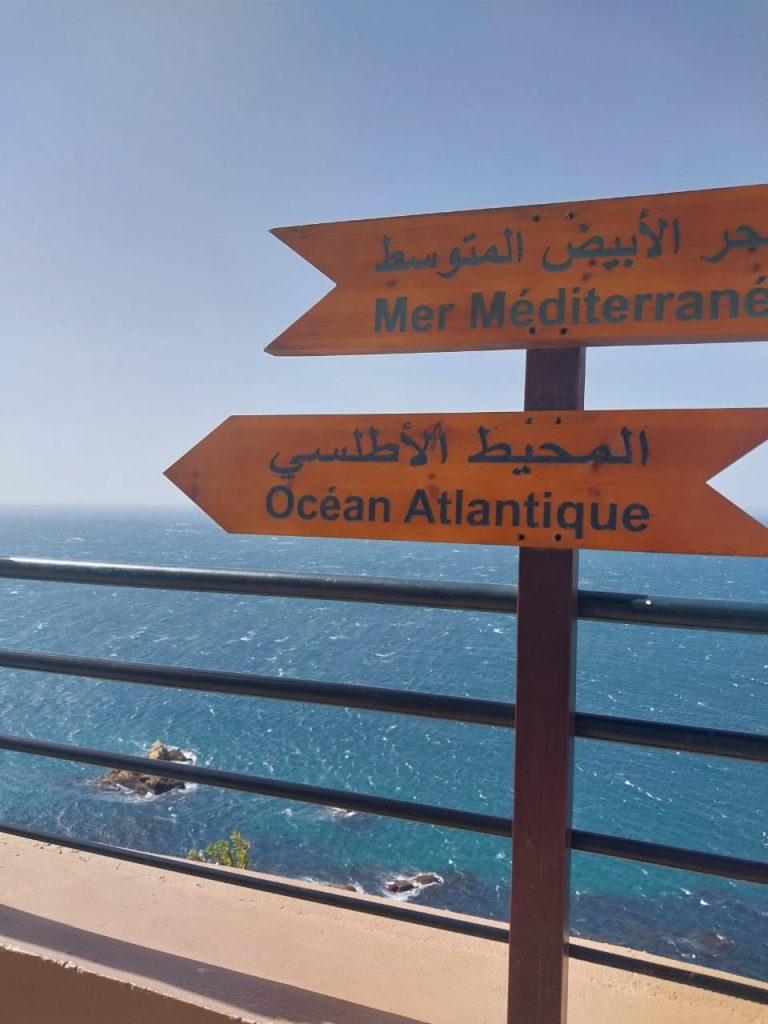
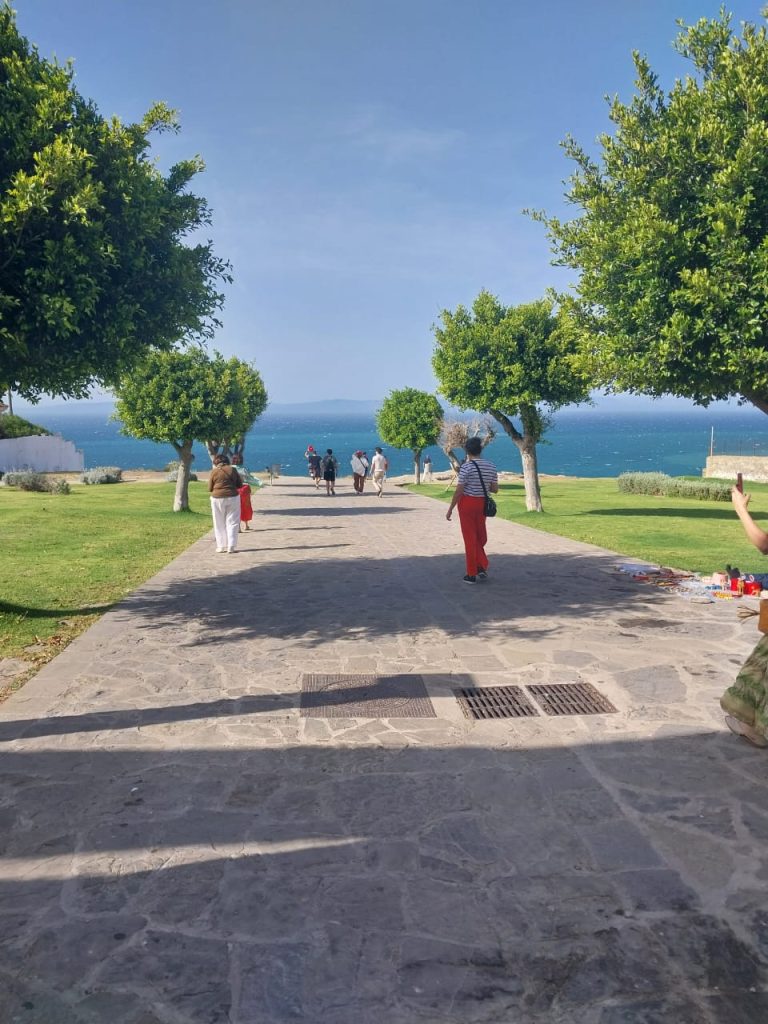
What visitors see from this stretch of land jutting out into the water—Cape Spartel—is the Strait of Gibraltar, the passage that not only marks the meeting point of the Mediterranean Sea and the Atlantic Ocean but also separates the African and European continents. Yet “separates” is almost a contradiction, as Europe and Africa are remarkably close at this point, divided by little more than ten kilometers of water. From Spartel, the outlines of the European coast are visible in the distance.
As a country deeply committed to tourism, Morocco has developed this stretch of coastline to welcome visitors. Within the Cape Spartel tourist complex, stone pathways and stairways lead to excellent viewpoints in surroundings that resemble a vast green, flower-filled garden, backed by hills and dotted with palm trees.
Completing the scene is the lighthouse at one end of Cape Spartel. Established in 1864, it is set within a building featuring the region’s characteristic architecture, with light-colored walls, a tower, narrow tall windows, and stained-glass details.
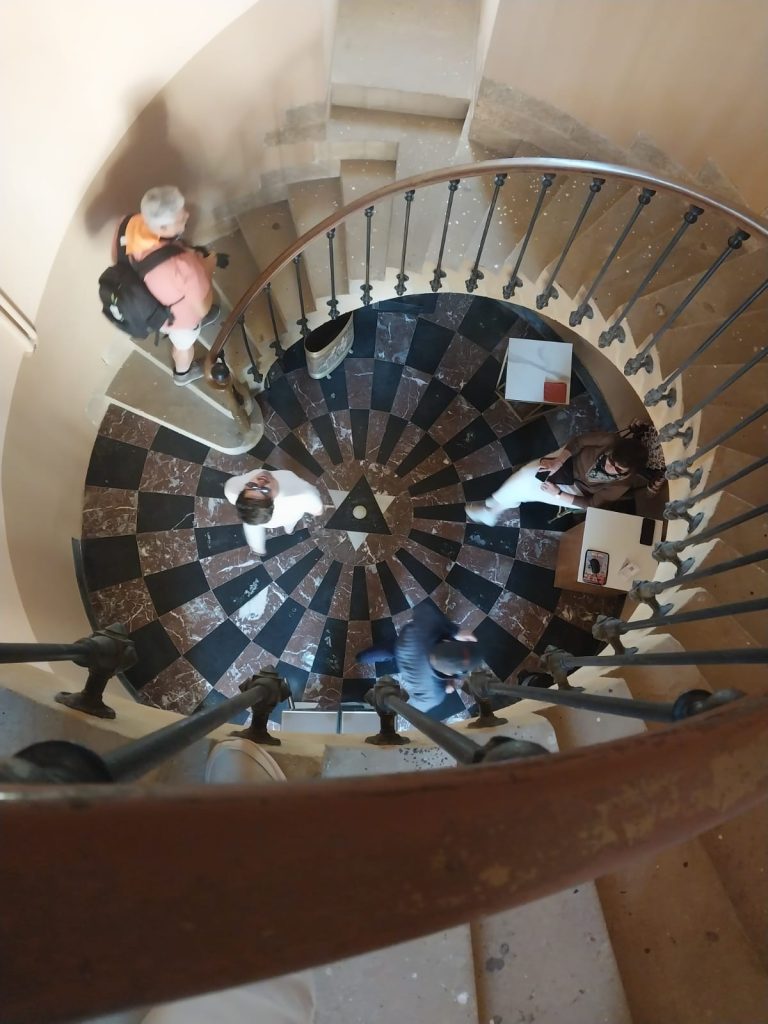
The former lighthouse keeper’s residence now houses a museum on the ground floor and upper levels. At the top is the lighthouse lookout point. Cape Spartel stands about 300 meters above sea level, already offering privileged views, but from the lookout visitors can admire the waters from an even greater height.
A narrow spiral staircase inside the museum leads to the open-air platform at the top. It can be a challenging spot on particularly windy days, but the scenery is spectacular. From the panoramic terrace, sea and sky seem to merge into one, much like the waters below—only in different shades of blue.
Inside the museum, an introductory text explains that the site chronicles key moments in Morocco’s relations with foreign powers, as well as the history of maritime trade and navigation. Surrounded by rocky shores, the waters near the cape were long considered hazardous, making the museum a storyteller of tragedies and triumphs linked in one way or another to the Strait of Gibraltar.
Among its exhibits is the record of a major Brazilian maritime disaster: the wreck of the ship Dona Isabel off this coast in 1860.
Displays on the walls tell the stories of ships, as well as the lighthouse itself, including its technical specifications and the architecture designed by French architect François Léonce Reynaud. Visitors can also explore this history through videos, maps, scale models, sculptures, and photographs.
At the heart of the building, an open central courtyard gives the museum the feel of a riad, complete with midday sunshine and lush greenery that make the space especially inviting.
The Cape Spartel complex also features restaurants, shops, exhibition spaces, and other attractions for visitors. More information on visiting Cape Spartel is available on its official website.
There in the medina
Cape Spartel is not far from Tangier’s medina. So, if your itinerary does not allow for several days in the Moroccan city, it is worth at least exploring its historic district and coastline. From Tangier’s old town, the sea appears from many vantage points, providing a backdrop to rocky heights, the medina’s stairways, and even the old buildings lining its narrow alleys.
Walking through the medina’s streets means encountering history, handicrafts, aromas, and a constant flow of locals and foreign visitors. The whitewashed façades that dominate Tangier offer a sense of calm and refreshment.
Read the other articles in the series on tourism in Morocco below.
The journalist traveled at the invitation of Royal Air Maroc, Dar Ba Sidi & Spa, and Alizés agency.
Translated by Guilherme Miranda
