



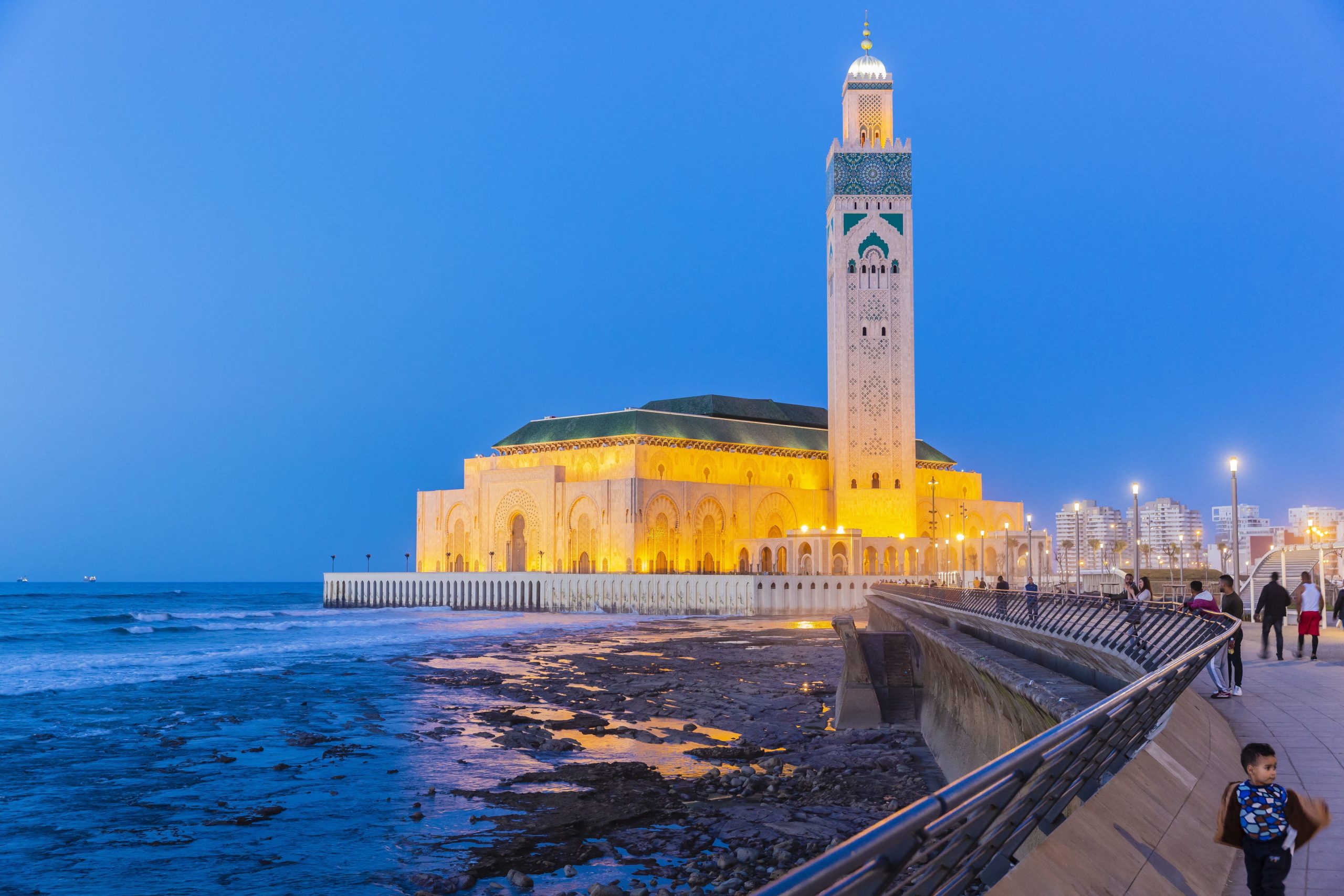
Casablanca – From afar, it appears majestic and beautiful. Up close, it also offers the silence and serenity that can be found in great houses of worship. This is the Hassan II Mosque. Ranked among the largest mosques in the world and home to the tallest minaret, this Muslim temple in Casablanca, Morocco, gives a sense of its own grandeur. It also boasts other remarkable features, including a two-hectare prayer hall and a light beam projecting 30 kilometers toward the holy city of Mecca.
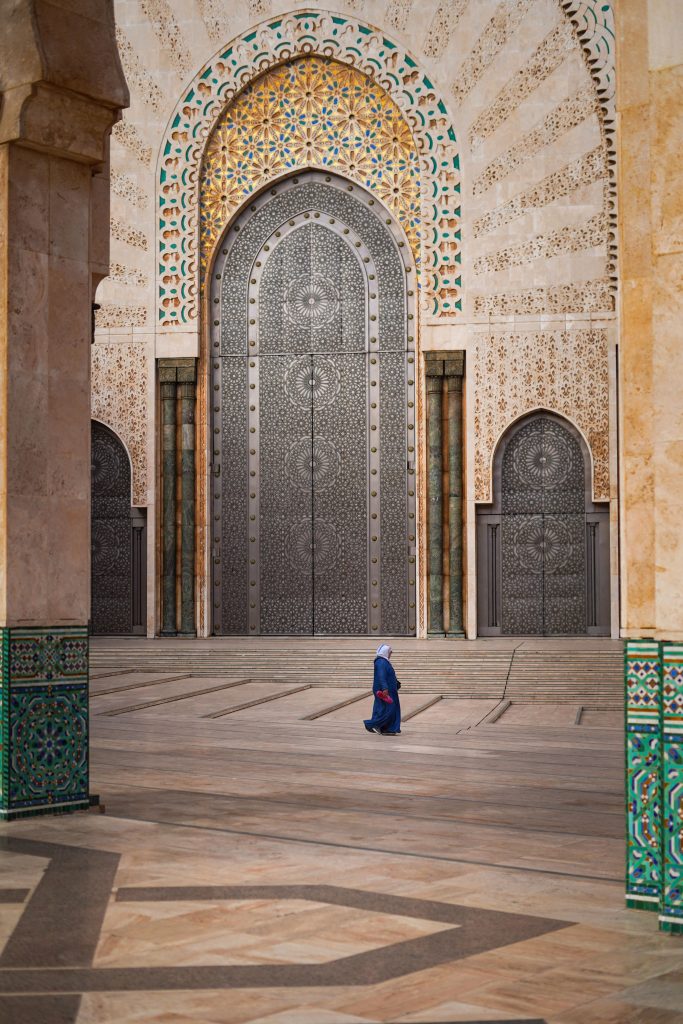
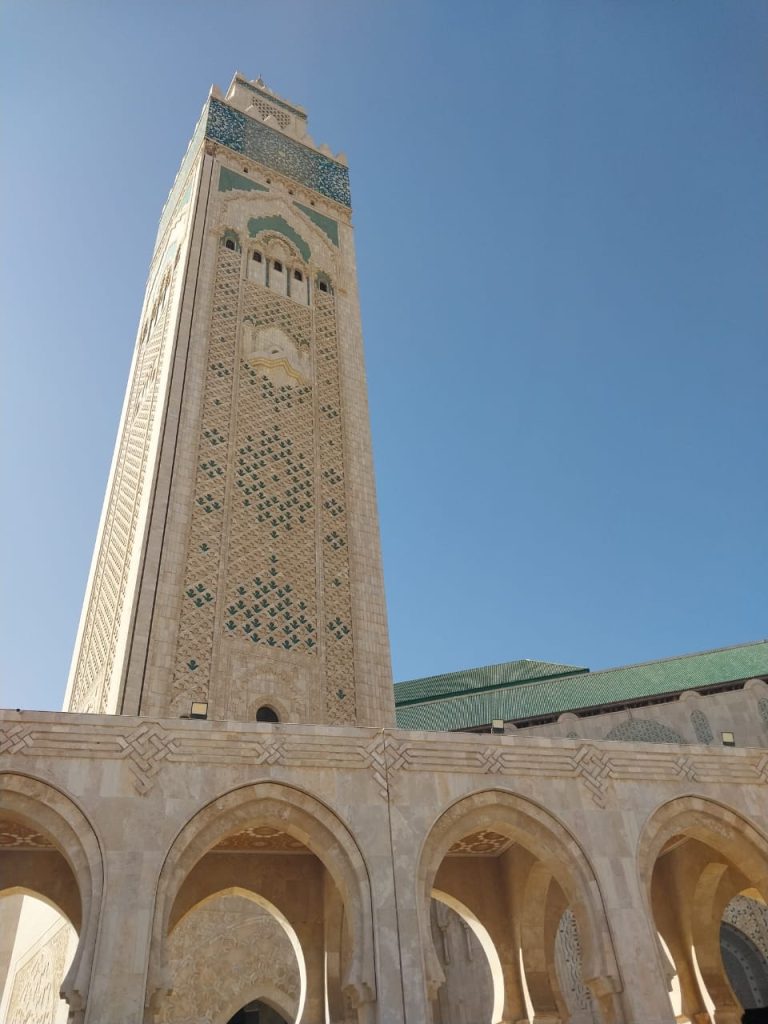
The mosque is a must-see for anyone visiting Casablanca, whether they follow Islam or not. Around 850,000 people visit the site each year, according to the tour guide leading a group of Brazilians through the complex in late May. The 200-meter tower, known as the minaret and from which the daily Islamic calls to prayer are made, serves as a backdrop for photos taken by Asian, American, and other visitors from around the world. Visitors are not allowed to climb the minaret.
The mosque is named after King Hassan II, who laid its foundation stone in 1986 and inaugurated it in 1993. Now deceased, Hassan II was the father of Morocco’s current monarch, Mohammed VI. The project was conceived to give Casablanca a major landmark, since another iconic architectural work—the mausoleum of King Mohammed V, Hassan II’s father—had been built in Rabat, Morocco’s capital.
The guide is keen to explain that the mosque’s design was inspired by a verse from the Quran, the holy book of Islam: “the throne of God was upon the waters.” For that reason, the mosque was built on the edge of the Atlantic Ocean in a way that makes it appear to float above the water. Its construction involved 12,500 workers and artisans, and the chief architect was Frenchman Michel Pinseau (1924–1999).
The materials used in the mosque, as well as their scale and origins, spark great curiosity among visitors, who pepper the guide with questions. They learn about the cedar wood featured throughout the structure, as well as the marble, ceiling domes, ornate beams, and grand chandeliers. Visitors also discover that the floor is equipped with a heating system and that the roof can be opened for ventilation when the mosque is crowded. According to official figures, the mosque can accommodate up to 25,000 worshippers inside.
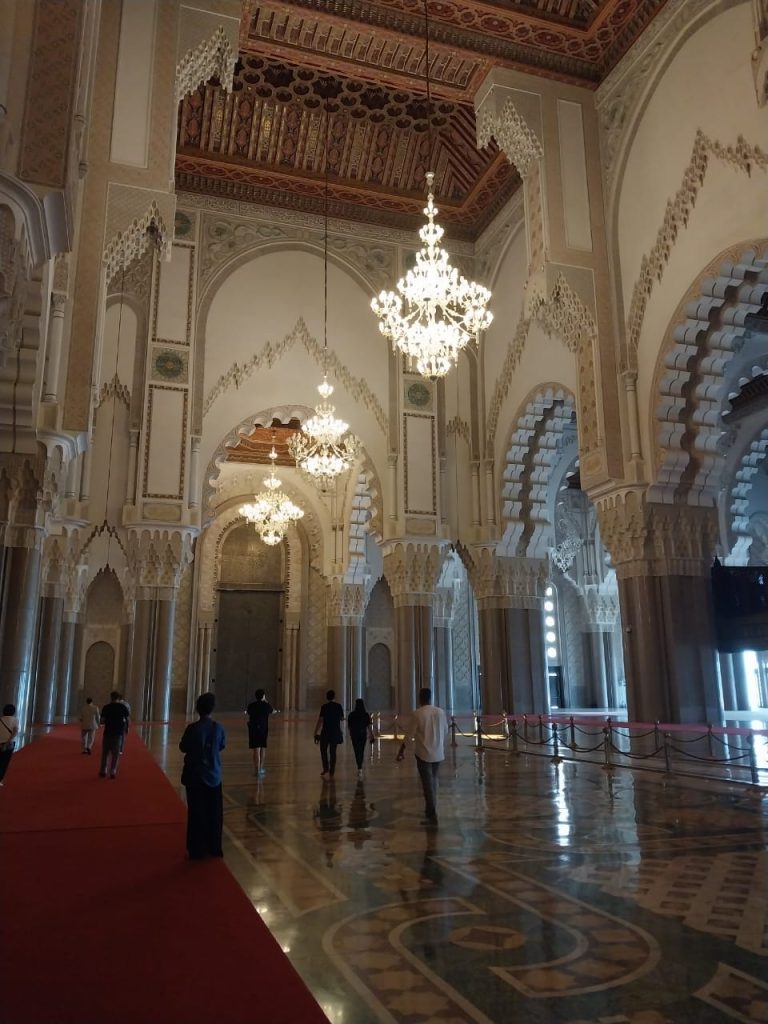
The vastness of the prayer hall is striking. So is the height of its ceiling. Everything is so immense that visitors walking through the space seem tiny by comparison. Even a voice unable to remain silent or speak softly, as the setting demands, is swallowed by the mosque’s enormity. It is impossible to pass through without reflecting, at least for a moment, on faith and humanity. The Hassan II Mosque is an invitation to appreciate beauty and experience the divine.
Beyond the temple’s interior and its majestic prayer hall, a visit to the mosque should also include a stroll through its outdoor areas. The courtyard, whose paved surface can accommodate up to 80,000 people, offers views of the sea. Visitors can also explore the ablution halls, which feature lotus-shaped fountains. These spaces are used for the ritual washing and purification that Muslims perform before prayer.
For more information about the Hassan II Mosque, including visiting days and hours, visit the official website.
The journalist traveled at the invitation of Royal Air Maroc, Dar Ba Sidi & Spa, and Alizés agency.
Read the other stories in ANBA’s series on tourism in Morocco:
Translated by Guilherme Miranda
