



São Paulo — A visiting professor at the Federal University of São Paulo (Unifesp) is conducting research on Mazagão Velho, a district in the municipality of Mazagão, Amapá state, settled by people from Morocco. Initially intending to study Moroccan identity in Mazagão Velho, Mahfouz Ag Adnane encountered local traditions and histories that go beyond geographic origins, providing new insights for his research.
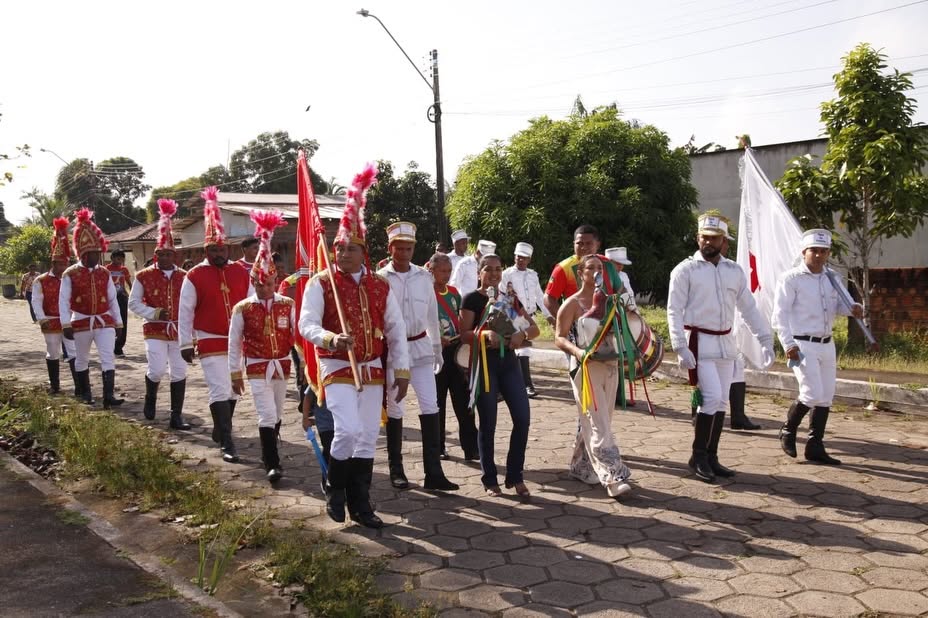
Born into a Tuareg community in a territory that is now officially part of Mali, Adnane is a naturalized Brazilian citizen and teaches in Unifesp’s Department of Art History, where he conducts postgraduate research on Morocco. In July, he visited Mazagão Velho with other researchers and attended the Festa de São Tiago, a major cultural and religious celebration that reenacts a battle between Moors and Christians, drawing on historical ties to Morocco.

“People are very proud of their Moroccan and African origins. The population really wants to affirm this identity,” the researcher told ANBA.
Based on this observation from his field visit, Adnane intends to describe Mazaganese identity from the perspective of the people of Mazagão.
“They claim Moroccan ancestry, and that is what interests me,” he said.
The researcher is expected to return to Amapá, including Mazagão Velho, in November.
Mazagão Velho’s historical ties to Morocco date back to Portuguese colonization of the North African country. According to Adnane, Portugal maintained a fortress in Mazagão, now known as El Jadida, for two centuries.
“There was already a population in the region when the Portuguese occupied the site, built structures and enclosed it with walls and fences. But they didn’t stay for just 10 or 20 years—they remained for two centuries. The Portuguese who were born and raised there didn’t even know Portugal. From my point of view, these people were of Portuguese origin, of course, but they were Moroccan,” he said.
During the colonial period, Morocco prevailed in several battles against Portugal, but the Mazagão community remained under Moroccan rule. In the 18th century, however, a royal decree forced its residents to leave the country. According to Adnane, Portugal took them first to Lisbon, then to Belém, Brazil’s Pará state, and eventually to what is now Mazagão Velho. Over the years, many residents left Mazagão Velho for the municipal seat or other nearby areas, but the district is still home to people who preserve this historical memory.
Every July, residents of Mazagão Velho reenact a battle between Moors and Christians, centered on a soldier known as Saint James, giving the conflict between Moroccans and Portuguese a religious rather than territorial dimension. In the reenactment, the Christians defeat the Moors, a term used to refer to Muslim peoples who ruled the Iberian Peninsula between the eighth and 15th centuries. Mazagão Velho was established in 1770, when the community that had lived in Morocco was relocated to Brazil, nearly three centuries after Muslim rule in the Iberian Peninsula ended.
In addition to attending the festivities in Mazagão Velho, Adnane came across information that prompted him to reflect on and reconsider his research into local identity. These findings included the departure of much of Mazagão Velho’s white population to nearby areas, the predominance of Christian religious practices among residents, research indicating African ancestry in the local population’s DNA, the presence of dependents and other accompanying members who arrived with the Portuguese-origin community from Morocco, the portrayal of Saint James, an apostle of Jesus Christ, in the festival, and references to the Crusades and the expulsion of Muslims from the Iberian Peninsula in the reenactment, among other elements.
Other researchers who took part in the visit to Mazagão Velho included John Fletcher, a professor at the Federal University of Pará (UFPA), and Denise Dias Barros, a faculty member at the University of São Paulo (USP), who coordinates the Link’Art Áfricas project, in which Adnane and Fletcher also participate. Supported by São Paulo state government’s research foundation (Fapesp), the project brings together researchers to study artistic creation in African contexts from 1980 to the present and includes Mazagão Velho in its scope. Adnane, Barros and Fletcher are also involved in an emerging network exploring the themes of deserts and forests.
Studies in Egypt and Brazil
Adnane is expected to submit the findings of his research to Unifesp in the form of articles or a book by March next year. The professor has an extensive academic background. A member of the Amazigh, a North African people, he learned to read and write in Arabic in his native community. As a young man, he was selected for scholarships awarded to Muslim populations to study in Egypt, where he lived for 10 years. There, Adnane earned a degree in History and Civilization from Al-Azhar University and a master’s degree in Contemporary African History from Cairo University.
The researcher moved to Brazil in 2012 while still pursuing his master’s degree in Egypt. He also earned a master’s degree in history from the Pontifical Catholic University of São Paulo (PUC-SP), where he later completed a PhD in history. Morocco has been part of the professor’s academic and personal life for many years. His ties to the country include attending festivals there, participating in Amazigh groups, studying regional music and visual arts, and following the work of Moroccan artists during activities in Brazil, among other connections.
Translated by Guilherme Miranda