



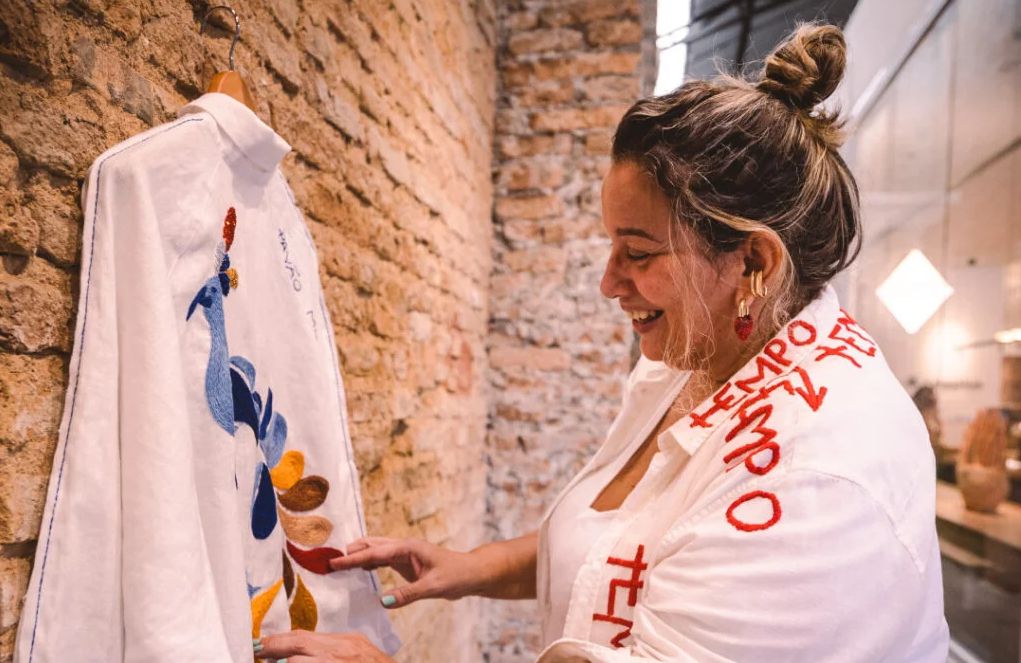
São Paulo — Founded in 2016 by Alina Amaral from Brazil’s Alagoas, the eponymous clothing brand produces contemporary, original designs using artisanal techniques and is expanding to Dubai (United Arab Emirates), Portugal, Milan (Italy), Johannesburg (South Africa) and New York (United States).
“In recent years, I’ve made at least four sales to people living in Dubai, UAE. I remember that two of these private sales took place through my brand’s Instagram page. One customer was US-born woman living in Dubai. She commissioned a kimono embroidered with the lyrics of a Toquinho song,” says the 56-year-old fashion designer and journalist.
“Besides these sales, I remember another purchase that took place in Brazil. Last year, a Dubai resident was vacationing at a luxury hotel in Salvador and found and bought one of my pieces at an event held at Palacete Tirachapéu.”
According to Amaral, her unique, meaningful garments appeal to people in the Arab country because they have a keen appreciation for and interest in Brazilian colors, fabrics and craftsmanship.
“They have access to all kinds of luxury goods, but we know that luxury is increasingly moving closer to what is human, handmade and exclusive. I believe this shift in thinking will bring Arabs closer to my brand. On my end, however, I need help from business partners because I don’t really know how to reach these consumers,” explains the designer from Alagoas.
Other international sales
Besides Dubai, the Brazilian brand has also reached markets in Europe and Africa.
“My first international initiative was in 2023, when I created a special collection for a store in Johannesburg, South Africa. After that, I took part in an event in New York [U.S.] during the city’s Fashion Week, and in 2024 I visited Milan for the first time at the invitation of ApexBrasil, the government’s trade and investment agency. That year, I showcased my pieces in a showroom,” Amaral says.
“This Portuguese client owns an upscale store that features handcrafted fashion from around the world. She discovered my work at the Milan showroom. This year, we are developing another collection for her, which will be sold during the European summer,” the businesswoman recalls.
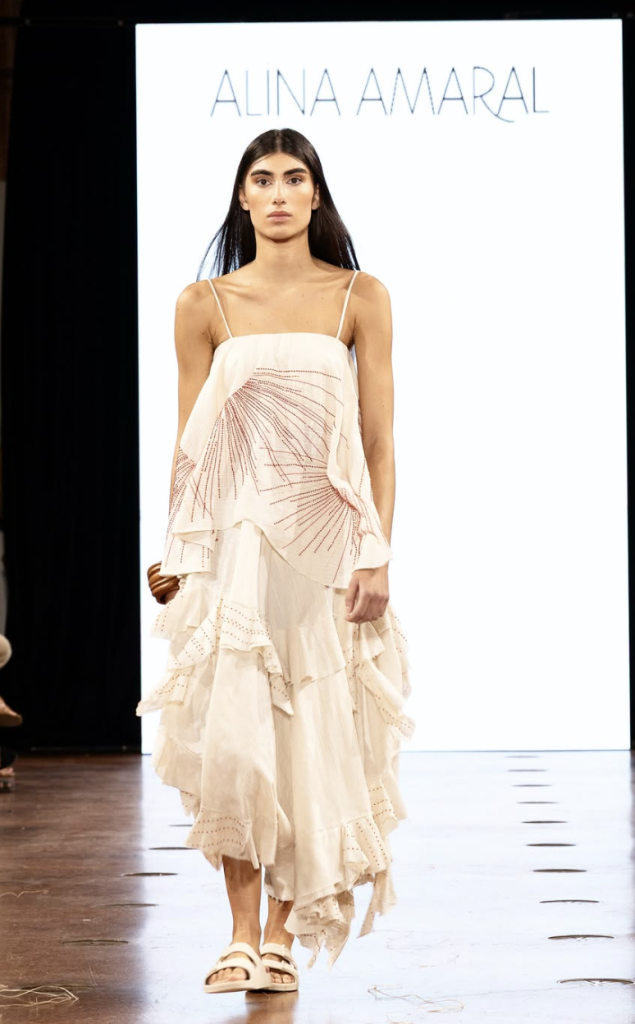
In 2025, the clothing brand was selected to participate in a fashion show in Milan and received the international Friend of the Earth (FOE) certification, a sustainability seal awarded by the World Sustainability Organization (WSO).
“Having this international seal is a privilege because it recognizes sustainable brands that use traceable materials, demonstrate social responsibility and preserve traditional knowledge through handicrafts.”
The certification enabled the Brazilian company to participate in Milan Fashion Week 2026. It was one of 13 brands selected by the WSO to present their new Spring/Summer 2026 collections.
Held in September 2025, the event was endorsed by the FOE certification, which sets strict sustainability standards for the fashion industry.
Alina Amaral’s participation in the fashion show was also supported by the Internationalization Program for the Brazilian Textile and Fashion Industry, a partnership between the Brazilian Textile and Apparel Industry Association (Abit) and ApexBrasil.
Looking ahead, the businesswoman aims to further expand her brand’s international presence.
“In November, I will take part in Micsul [Southern Cultural Industries Market], an international business matchmaking event in Paraguay. Selected by Brazil’s Ministry of Culture to participate, I will meet with people from around the world, including China, Dubai, the United States and Europe. Next year, I intend to open a retail outlet in São Paulo and another in Portugal.”
Brand history
A journalism graduate with a specialization in fashion, Amaral developed an interest in the field at a time when Brazil had few voices covering the industry.
“I was a pioneer in this field in the state of Alagoas. I spent six years covering national and international fashion seasons for various magazines. I then spent another nine years working in fashion production and styling stage outfits for artists such as Daniela Mercury and Carlinhos Brown. During that time, I lived in Salvador, São Paulo and New York for work,” Amaral says.
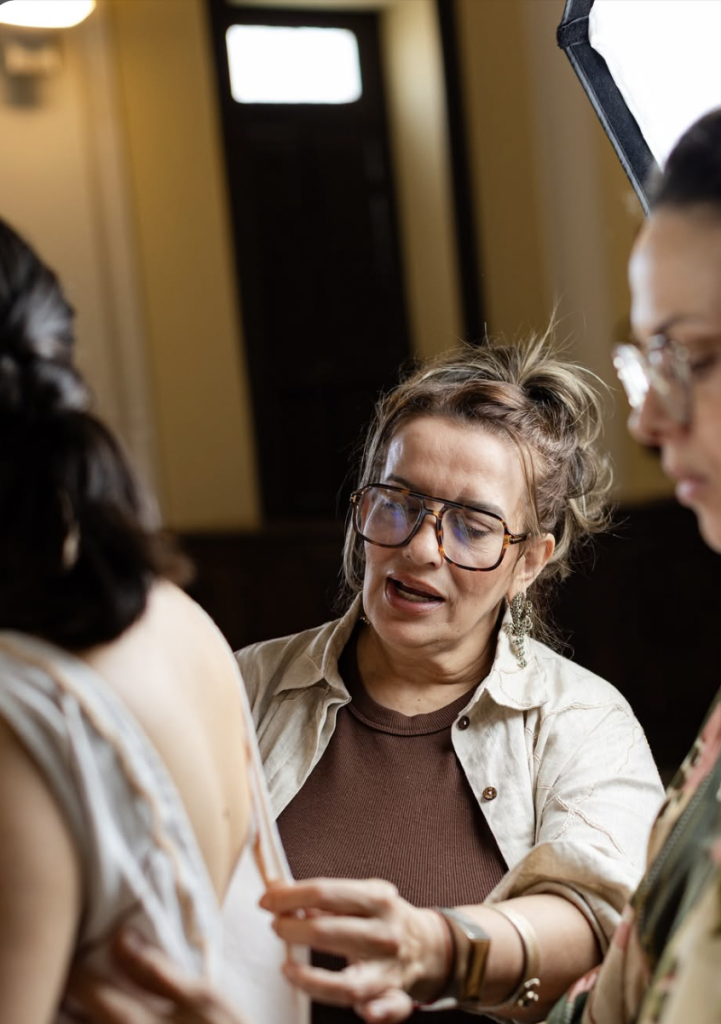
In 2016, after returning to her home state, Amaral decided to pursue her dream of creating original clothing designs.
“Since the show business market in Alagoas is very small, when I returned, I decided I wanted to bring the stage costumes from the world I had worked in into everyday clothing. That same year, the president of an NGO asked me to develop an inclusion project in which I would teach a productive skill to women in northeastern Brazil. That initiative brought me the women who would later become my employees.”
As she considered what skill to teach the women, Amaral thought back to her roots. Born in the Alagoas hinterland, the entrepreneur grew up in her aunts’ fabric and haberdashery shop, where she witnessed the craft traditions of the women in her town.
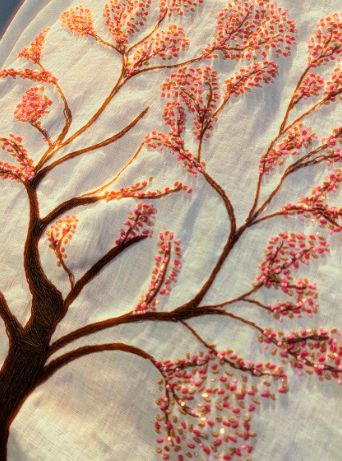
“Because industrialization came late to Brazil’s Northeast, much of the region’s traditional knowledge has been preserved, giving us a rich heritage of handmade crafts. Growing up in this region, I learned to embroider as a child and decided to pass that knowledge on. Over the past 10 years, I have established the Aarteando women’s collective and helped train more than 600 women in freehand embroidery,” Amaral recalls.
Some of these women are now responsible for producing the blouses, kimonos, crop tops and shirts sold by the Alagoas-based brand.
Read more:
Brazilian kids’ wear brand Camu Camu goes global
Report by Rebecca Vettore, in collaboration with ANBA.
Translated by Guilherme Miranda

