



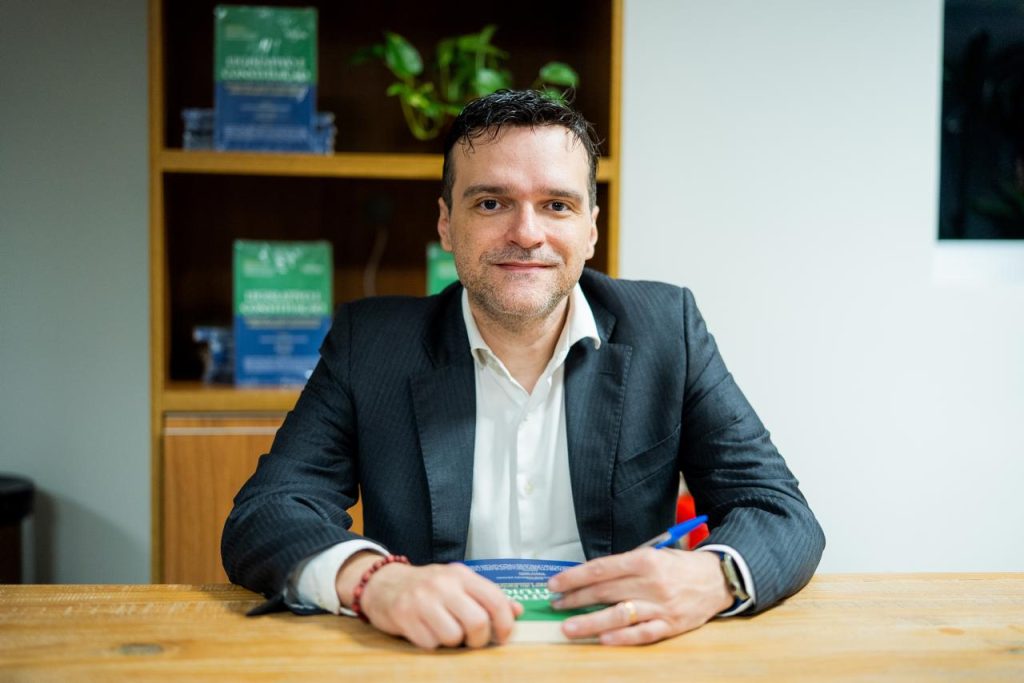
São Paulo – Felipe Aburachid arrived in Brazil in the 1910s, at just 12 years old, and headed straight to Belo Horizonte to make a living. His only relatives already living in the country were cousins in Rio de Janeiro. Why did he not join them, given that he was so young, still almost a child, and could not even say hello in Portuguese? “Because the capital of Minas Gerais state was a new city full of opportunities,” says his grandson Frederico Aburachid, a lawyer and businessman who served as president of the Lebanese Foundation of Minas Gerais (Fuliban) until April this year.
In Belo Horizonte, his grandfather Felipe, who lived to the age of 90, followed the path taken by many other Lebanese immigrants—he worked as a peddler until he opened his own clothing business. Later, in the 1960s, Frederico’s father and uncle founded another clothing company, Marcel Philippe, which is still in business today.

These are the kinds of stories Frederico wanted to bring together when he came up with the idea of creating the Memorial to Lebanese Immigration in Minas Gerais. The Fuliban project includes a website where descendants can register to share their family stories, social media channels, occasional lectures and a traveling exhibition that will visit other cities across the state. For now, the exhibition remains in Belo Horizonte. In addition to bringing the community together and preserving families’ memories, the memorial also tells the story of Fuliban itself, which marked its 55th anniversary in 2025, the year the project was officially launched.
Approved under Brazil’s Rouanet Law, the memorial enlisted Rodrigo Ayupe, a researcher with the Middle East Studies Center at Fluminense Federal University (UFF), to conduct its research. Both the website and the exhibition feature a timeline tracing the journey of Lebanese immigrants in Minas Gerais. “In addition to the stories, visitors to the exhibition can ‘travel’ to Lebanon using 3D glasses and explore traditional sites around the country,” Frederico explains.
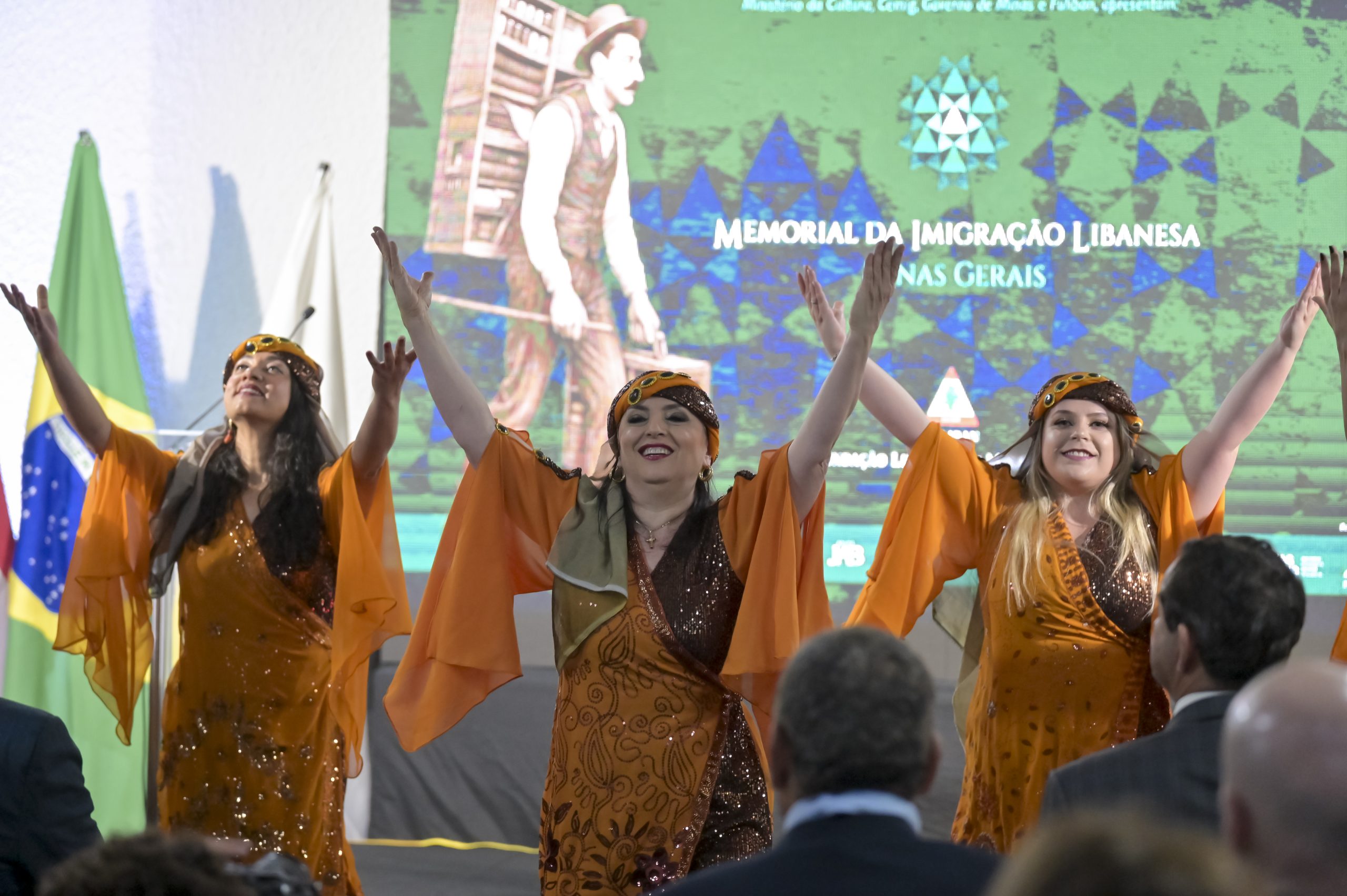
The project was previewed at the Palácio da Liberdade, a cultural landmark in downtown Belo Horizonte, with support from the state government. The exhibition opened at the Lebanese Club in the Pampulha neighborhood. It will next move to a college in the state capital before traveling to Viçosa, Uberlândia, Governador Valadares, Lavras and Teófilo Otoni, cities with large populations of Lebanese descendants.
“The truth is that the community has spread out, so you’ll find people in any of Minas Gerais’ 853 municipalities,” Frederico says. “It’s important for the exhibition to travel and grow with more stories, because the memorial is not a project that comes to an end—it’s meant for posterity.”
Fuliban’s History
Founded in 1970, the Lebanese Foundation of Minas Gerais (Fuliban) was created to bring together Lebanese people in Belo Horizonte and other cities who had put down roots and prospered in Brazil. They were the second generation, the children of the pioneers. The organization provided a way to bring the community together, while also allowing its founders to express their gratitude and give back to the country that had welcomed their families. Its philanthropic arm, which supports vulnerable children and their families, has grown over the years and now relies on volunteers who are not necessarily part of the Lebanese community but identify with its social projects, particularly those focused on health.
“In addition to its social work, we have always supported cultural events featuring folk dances and organized various literary gatherings,” Frederico explains.
Another area of activity is political advocacy for causes the organization believes in, such as its efforts to work with the state government to establish a new hospital in Viçosa. More recently, Fuliban Jovem was created to carry out projects with daycare centers in Belo Horizonte.
Citizenship
Frederico is not only the grandson of Lebanese immigrants but also a Lebanese citizen, as is his son, to whom he has passed on “this sense of Lebanese identity.” In 2013, accompanied by one of his brothers, he visited Lebanon, where he attended a gathering of more than 300 businesspeople in Beirut. During the trip, he visited the house where his grandfather was born, in Sin el Fil, a suburb of the capital. The name means “elephant’s tooth” in Arabic, he says.
Beyond feeling warmly welcomed by the local population, as if Lebanese people today were in some way thanking Brazil for having welcomed their compatriots in the past, Frederico experienced something that may seem contradictory in a country so marked by war: peace.
“From high up in the mountains, when you see those ancient cedar trees and walk on sacred ground—home to saints revered by Lebanese Christians, such as St. Charbel—you feel an immense sense of peace. At the same time, you wonder: how can such a beautiful country, with such a welcoming people, suffer so much destruction and always have to rise from the ashes?” he muses.
In 2020, Frederico had planned to return to his other homeland, but the pandemic put those plans and dreams on hold. One day, he hopes to return.
Read also:
Research uncovers findings at Orthodox Cathedral
Report by Débora Rubin, in collaboration with ANBA
Translated by Guilherme Miranda
