
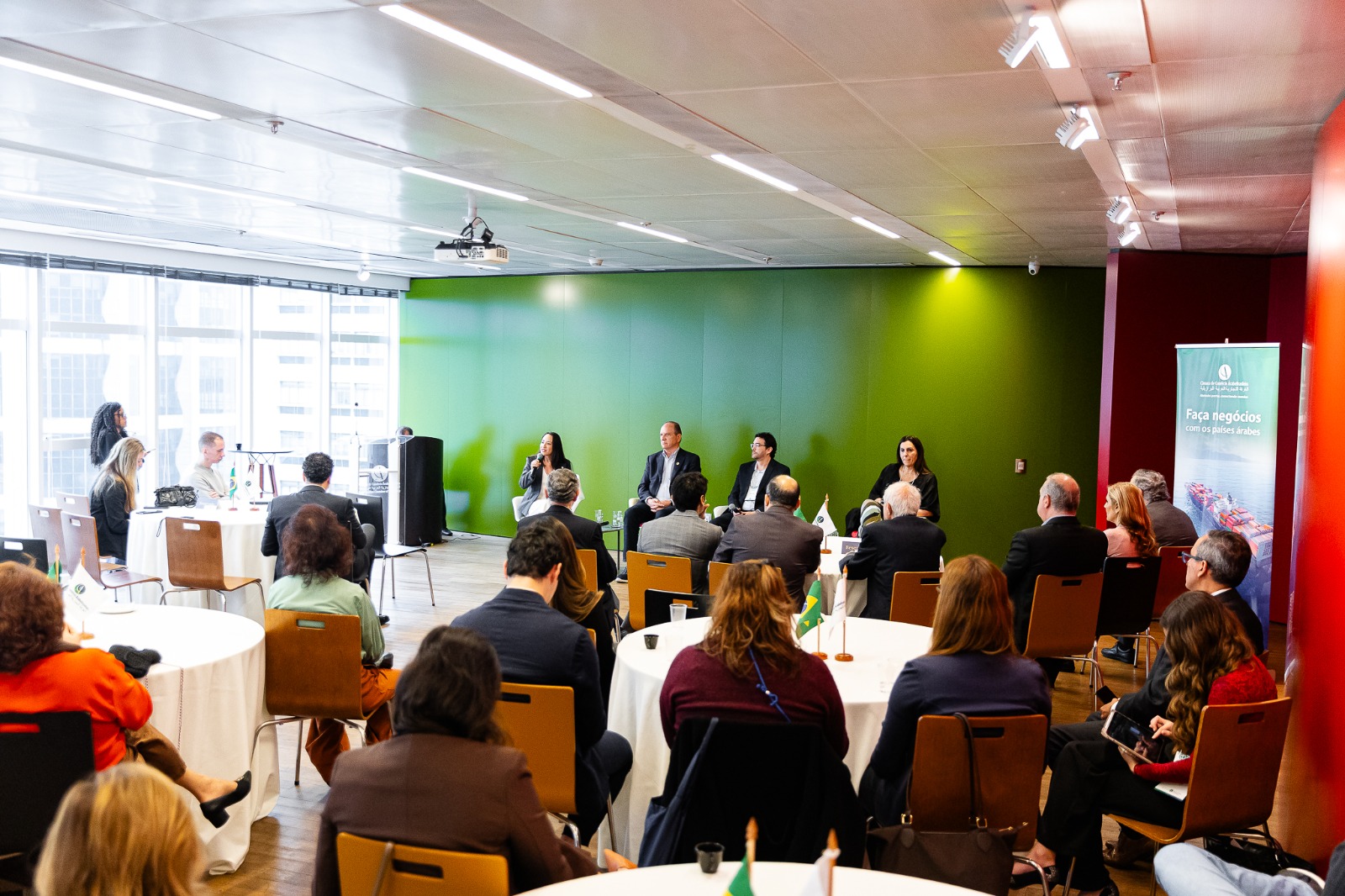
São Paulo – Three experts with experience in business internationalization shared their insights on operating abroad on Thursday (29) at “Breakfast with Members – Expanding into the Arab World: Understand the Market Before Exporting,” an event hosted by the Arab-Brazilian Chamber of Commerce (ABCC) at its headquarters in São Paulo. Speakers included Luiz Fernando Furlan, Brazil’s former Minister of Development, Industry and Foreign Trade (2003–2007) and chairman of LIDE Global; Julia de Biase, owner of Al Ward Arabic Perfumes Store; and Leandro Mota, export manager at M.Dias Branco.
Furlan, who also served as chairman of Sadia’s board, now a brand of MBRF, shared his experience leading the company and the ministry with around 70 invited guests. He said Brazil’s chicken exports to Arab countries began in 1975 in response to excess supply in the domestic market.
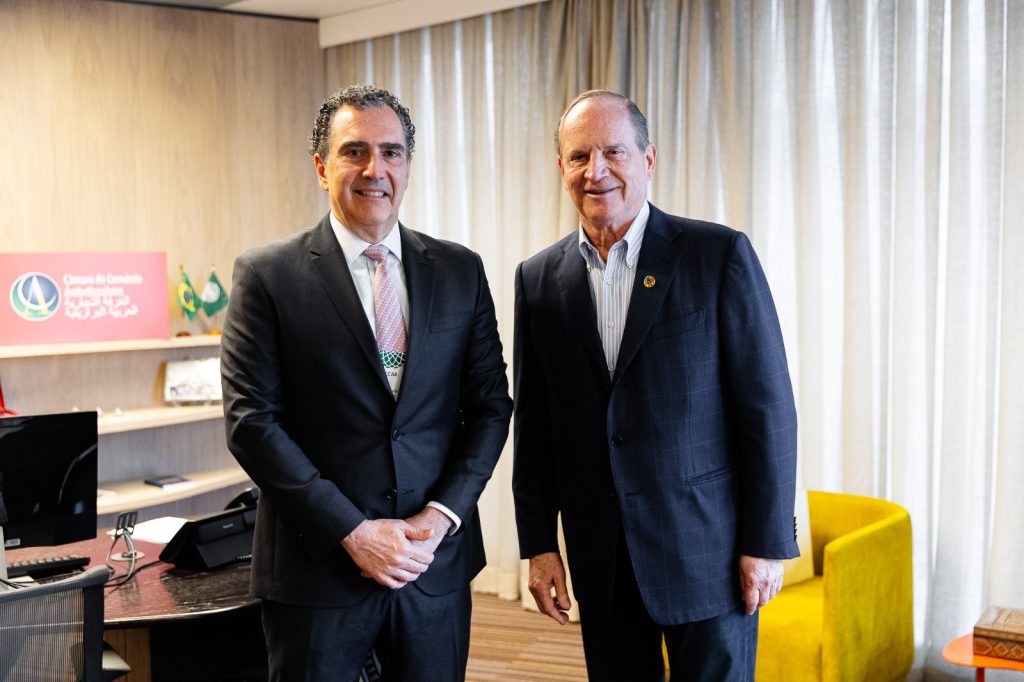
Since then, Brazil has undertaken several initiatives to professionalize and train its workforce to export chicken and many other products. Furlan recalled that when he took office as minister in 2003, Brazil exported USD 60 billion a year. His goal was to reach USD 100 billion in four years, but exports climbed to USD 160 billion following various overseas promotion initiatives. He said that 92 Brazilian companies took part in the government’s first trade mission to Dubai, in the United Arab Emirates, bringing product samples. “They all secured business deals by the end of the meetings,” he said.
Furlan said Brazil remains relatively closed to foreign trade, partly because operating in international markets is more challenging than doing business domestically and requires knowledge of target markets. He said it is essential for companies to send employees to trade fairs abroad to learn about competitors and the technologies used in their industries.
Leandro Mota of M. Dias Branco said companies seeking to expand internationally need to prepare and take a long-term view.
“It is important to move beyond seizing opportunities and adopt a deliberate approach to exporting,” he said, explaining that companies should view foreign markets less as a short-term opportunity and more as a long-term business model.
“Companies need to be proactive, study their own portfolios, understand markets and structure their operations for exporting,” he said. M. Dias Branco owns brands such as Piraquê and Adria. “We need to dispel the notion that if Brazil knows us, international markets know us too,” he added.
Julia de Biase represents UAE-based date supplier Al Foah in Brazil and owns Al Ward, a store specializing in Arabic perfumes. Her experience with the Arab world began with perfumes imported from Bahrain and later expanded to other Gulf countries. She said doing business with Arab partners requires patience and investment in long-term relationships, as Arab businesspeople value getting to know their commercial partners.
She also said companies should look beyond the Gulf for market opportunities.
“Egypt is growing rapidly and offers major opportunities, especially with the free trade agreements [with Mercosur]. There will be many new developments for Brazil, Uruguay, Paraguay and Bolivia,” she said, referring to her companies’ future plans.
The three speakers shared their experiences in a panel moderated by Karen Mizuta, head of international consulting at the ABCC and CCAB Lab, following Furlan’s brief presentation. Marcus Vinicius, the institution’s market intelligence manager, presented foreign trade data showing stronger trade ties between Brazil and Arab countries over the past decade, particularly through increased Brazilian exports of corn and soybeans.
The ABCC was represented at the meeting by its president, William Adib Dib Jr., who opened the event; treasurer Mohamad Abdouni Neto; former president Osmar Chohfi; and board members Sami Roumieh, William Atui, Alessandra Frisso and Eduardo Dama. The event was also attended by Qatar’s consul general in São Paulo, Almuhannad Ali Al-Hammadi, and Qatar’s consular assistant, Elian Al-Noor.
Read more:
Egypt’s SC Zone seeks Brazilian companies
Translated by Guilherme Miranda
