


São Paulo – The fifth edition of the Brazil & Arab Countries Economic Forum, held on Tuesday (25) at the Renaissance Hotel in São Paulo, brought together diplomats, association leaders, businesspeople and executives to discuss the transformation of the global economy and the new Brazil-Arab agenda in this context.
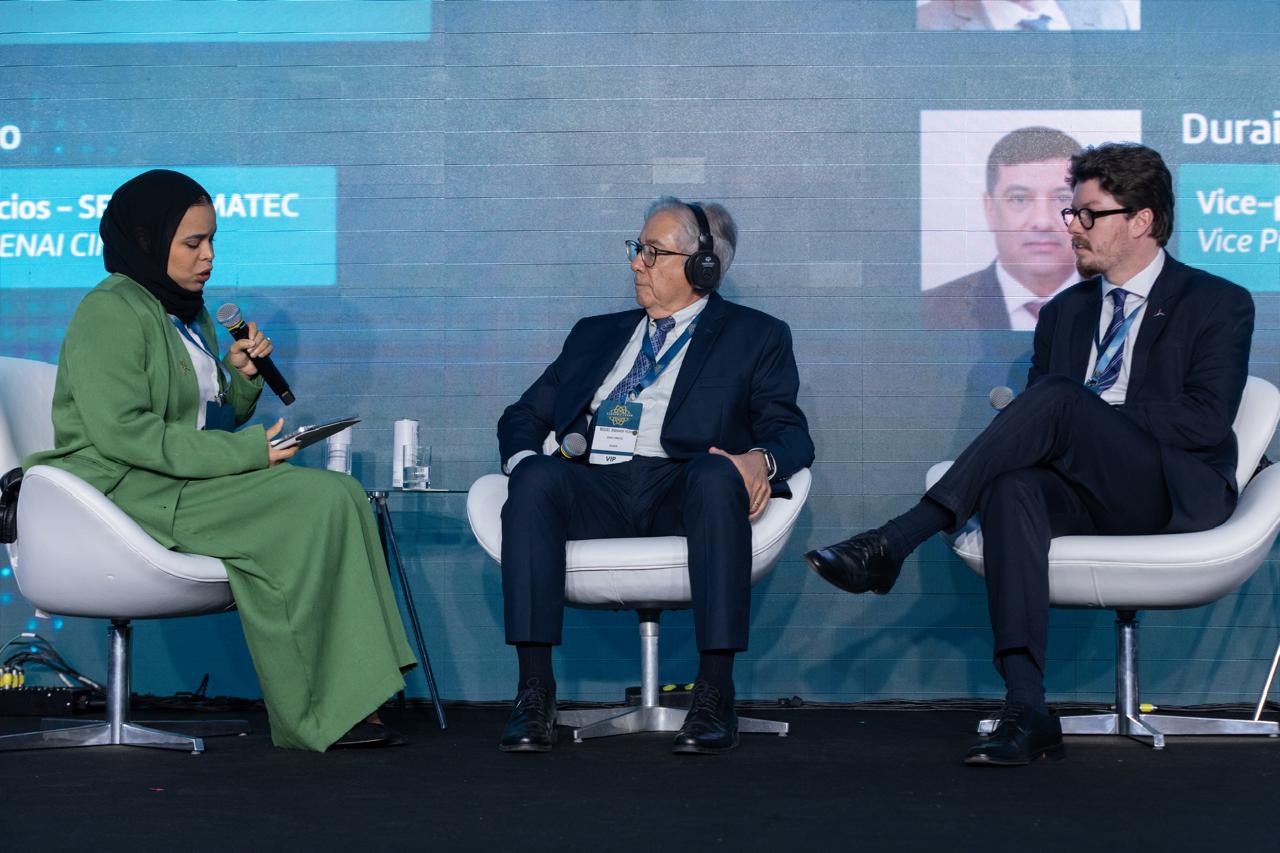
At the forum’s first flash panel, attended by participants both in person and virtually, speakers discussed Brazil’s energy opportunities and industrial activity. Participants included Rumaitha Al Busaidi, head of Business Development and Local Value Addition at Oman’s Hydrom, Miguel Andrade Filho, New Business executive at Brazilian university Senai Cimatec, and Juliano Martins, an investment and market intelligence specialist.
Andrade discussed the wind energy landscape in Brazil’s northeastern Bahia state, where he works.
“We are experiencing an exceptional phase, with wind and solar power being integrated into hybrid parks, providing greater consistency in wind power generation in the Northeast,” he said.
Martins commented on Brazil’s wind power generation capacity.
“We have storage capacity, a highly connected ecosystem and a strong regulatory framework, and we are seeing many opportunities to attract new customers seeking green energy. Regarding Arab countries, we want to understand how we can cooperate,” he said.
From purchasing to reliable food supply
Five of the six Arab importers who took part in the business round organized by the Brazil Halal Project participated in the forum’s second flash panel.
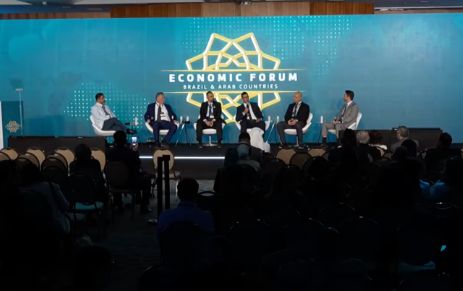
To open the discussion, moderator Estevão Carvalho, executive manager at the Brazilian Animal Protein Association (ABPA), asked the participants: What can Brazilian companies do to attract more Arab buyers?
Rasmi Khader Moh’d Almallah, general manager of SKM Tejaree, said, “I can say that Brazilian and Jordanian consumer behavior is similar. Now, to improve trade, I believe Brazilian manufacturers need to invest in translating their product packaging into Arabic. If they do that, I can say it will make it easier for their products to enter the market.”
Hamza Badri, commercial and supply chain director at Atacadão (LabelVie Group), noted similarities in consumption patterns between Brazil and Morocco.
“We are the only country that imported the Brazilian Atacadão wholesale model, and I believe that to further improve sales there, companies need to start adapting product sizes to local Arab markets according to their needs,” he said.
Ahmed Nabil Mostafa Shorky, founder and general manager of Khayrat Al Reef Foodstuff Trading LLC in Dubai, United Arab Emirates, Damon Afkari Modaresi, general manager of REZ FOOD Dubai and founder of PERSAÑOL Export Consultant in Madrid, and Redha Abdulameer Ali Abdulla Salman, deputy general manager of Al Zaeem, were also panel participants.
North African economy
The next panel featured Majdi M Ameen, CEO of Green Revolution Company, and Mohammed Elkhateeb, director at Sudanese Mineral Resources Company (SMRC), representing Sudan.
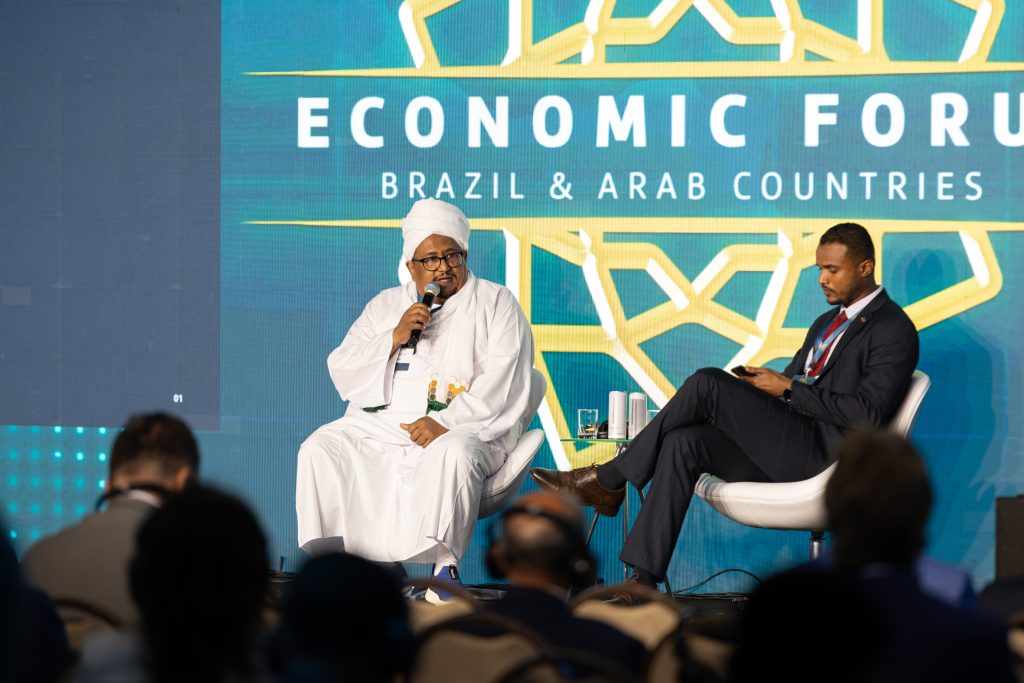
“Regarding agriculture, Sudan has millions of acres available for development, and we want to build strategic partnerships between our country and Brazil,” Ameen said.
Representing Sudan’s mineral governance sector, Elkhateeb provided an overview of the industry.
“Despite the challenges we face, we remain standing as an important economic pillar. We want to establish a direct, serious and transparent relationship to trade gold with Brazil. It is important to say that we are not looking for investors, but rather to exchange experience and technology with Brazilian companies,” he said.
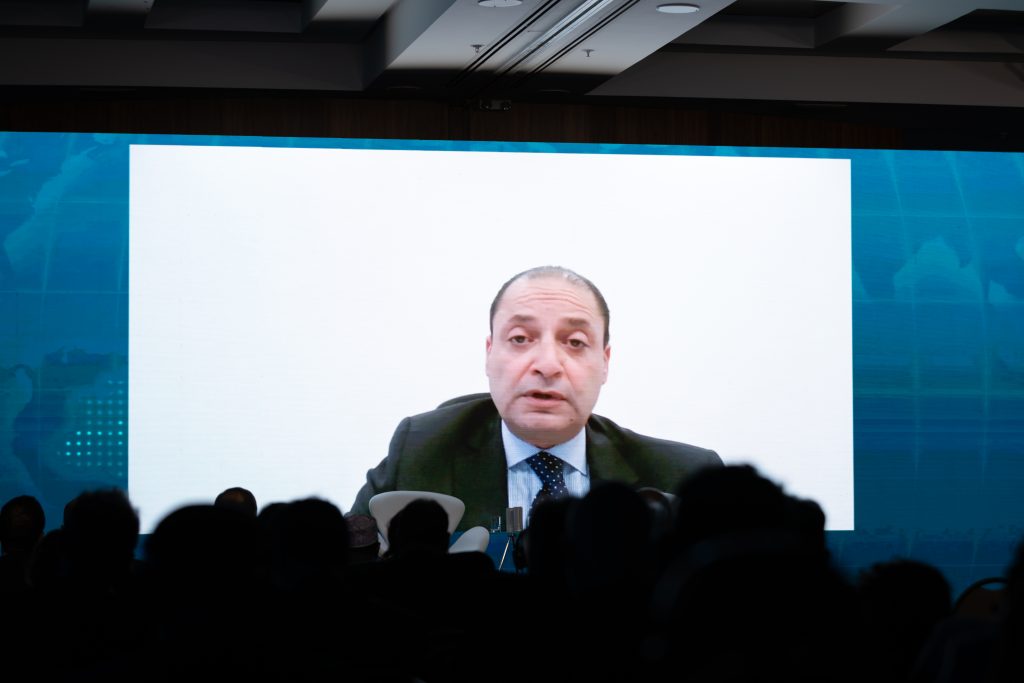
The panel also featured Walid Ahmed Mohamed Anwar Abdallah, vice president of Egypt’s General Authority for Investment and Free Zones (GAFI), who participated online.
“The global economy is changing. Supply chains are being redesigned. Technology is reshaping industries, and investors are increasingly seeking access to new markets. This creates a clear opportunity for Egypt and Brazil, and investment should become a bridge between our markets,” he said.
From corridors to trade in Ras Al Khaimah
In the final flash panel, Rashed Khalfan Al Nuaimi, director-general of the Ras Al Khaimah Chamber of Commerce and Industry, discussed a new market opportunity Brazil could find in the UAE.
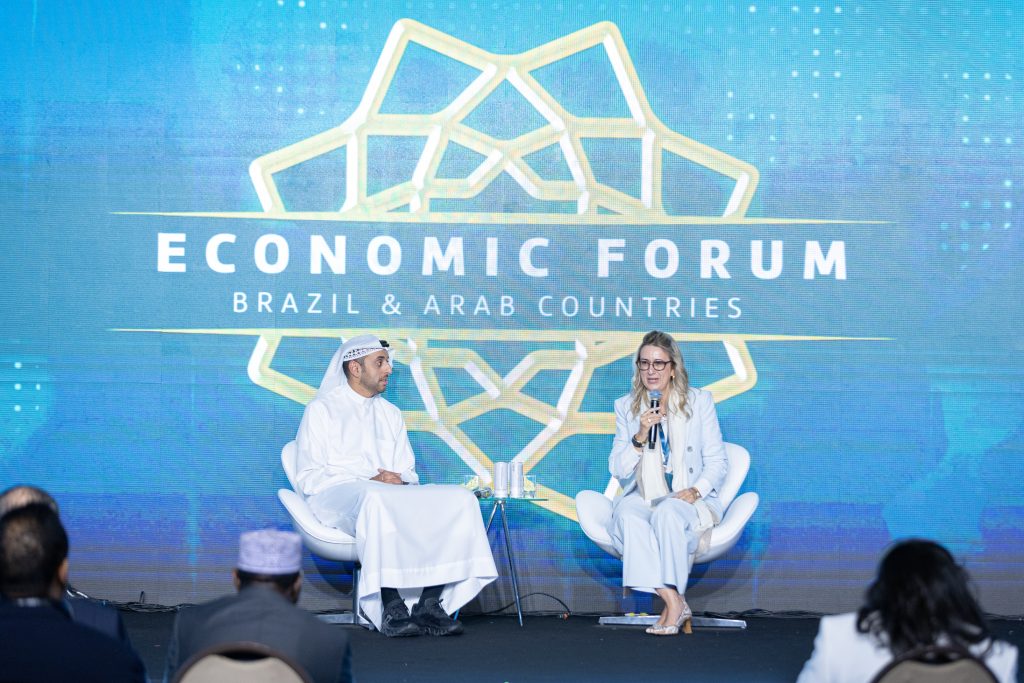
“We are an emirate that is still little known, but we have a strategic location and outstanding infrastructure. In addition, our community offers diverse business opportunities in tourism, food and logistics. Our chamber wants to build ties with Brazilian companies, and today we are ready to facilitate this dialogue,” he said.
Also participating in the panel, Natasha Yvette Ridge, executive director of the Al Qasimi Foundation, gave a brief overview of the importance of the arts.
“I believe that without collaboration and funding, the arts do not work. That is why we collaborate with different nations, including Brazil, and we are open to welcoming Brazilian artists.”
The Arab-Brazilian Chamber of Commerce (ABCC) was represented at the forum by President William Adib Dib Jr., Vice President for International Relations & Secretary-General Mohamad Orra Mourad, and former presidents Marcelo Sallum, Rubens Hannun and Osmar Chohfi. Also representing the institution were Treasurer-Director Mohamad Abdouni Neto, Vice President of Marketing Silvia Antibas, Administrative Vice President Nahid Chicani, and board members William Atui, Suzana Chohfi, Arthur Jafet, Alessandra Frisso, Claudia Yazigi Haddad, Lourenço Chohfi Neto and Sami Roumieh. Board member Renata Maron also served as master of ceremonies for the event.
The forum, organized by the ABCC, is sponsored by Fambras Halal, International Halal Academy, Vale, DP World, Cdial Halal, First Abu Dhabi Bank, MBRF Global Foods Company, Qatar Airways and MZAH Group Investment. Institutional supporters include the Arab League, the Union of Arab Chambers and the Federation of Industries of the State of Bahia. Cacilda Aragão Tours is a partner.
Read also:
Brazil, Arab nations face geopolitical challenges
Uncertain landscape calls for Brazil-Arab ties
Trust keeps Brazil-Arab food corridor open
Uncertain landscape calls for Brazil-Arab ties
Agreements seek to strengthen trade and investment
Translated by Guilherme Miranda
